- Published on
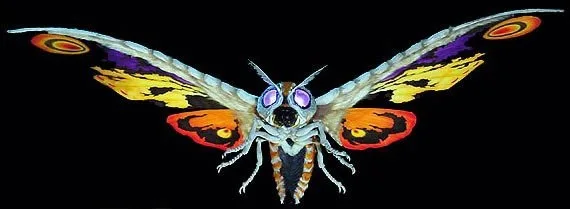
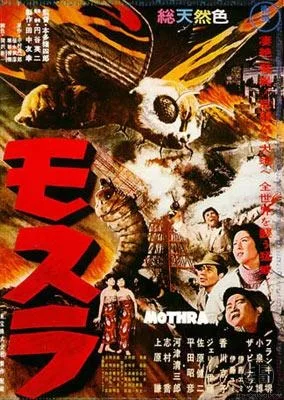
Mothra (モスラ Mosura) is a kaiju, a type of fictional monster who first appeared in the serialized novel The Luminous Fairies and Mothra by Takehiko Fukunaga, Shinichiro Nakamura, and Yoshie Hotta. Since her film début in the 1961 film Mothra, she has appeared in several Toho tokusatsu films.
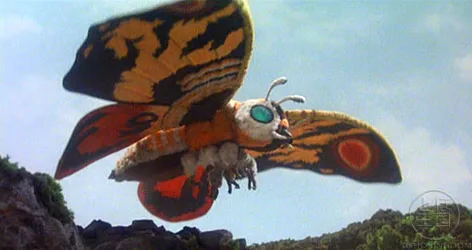
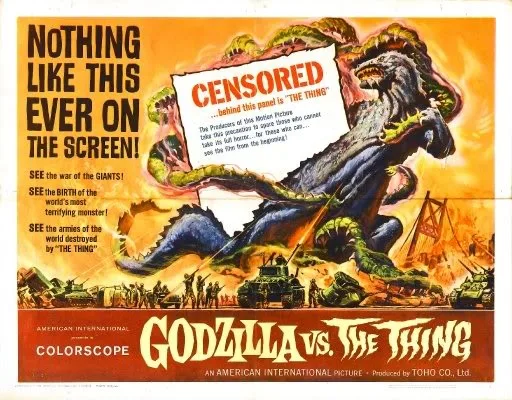
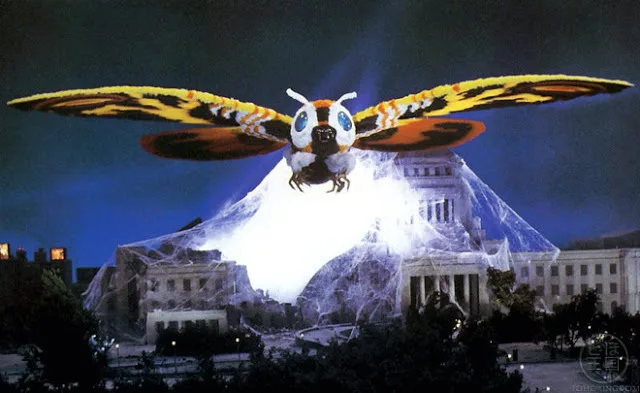
Generally regarded as female by English-speaking audiences, she is a giant lepidopteran with characteristics both of butterflies and of moths. She closely resembles an Inachis io, or a European Peacock Butterfly. The name "Mothra" is the suffixation of "-ra" (a common last syllable in kaiju names, viz. Hedo-ra, Ghido-ra, Ebi-ra, Goji-ra(Godzilla)) to "moth"; since the Japanese language does not have dental fricatives, it is approximated "Mosura" in Japanese. In the American dubbing of Mothra vs. Godzilla, Mothra is also referred to as: "The Thing". She is occasionally an ally to Godzilla but more often than not engaged in conflict due to his anger toward the human race. Mothra holds the most victories against the "King of Monsters." Mothra has never defeated Godzilla on her own, however. In each of these victories, Mothra had an ally; its own twin in Mothra vs Godzilla, Battra in Godzilla and Mothra: The Battle for Earth, and Mechagodzilla in Godzilla: Tokyo S.O.S..
Generally regarded as female by English-speaking audiences, she is a giant lepidopteran with characteristics both of butterflies and of moths. She closely resembles an Inachis io, or a European Peacock Butterfly. The name "Mothra" is the suffixation of "-ra" (a common last syllable in kaiju names, viz. Hedo-ra, Ghido-ra, Ebi-ra, Goji-ra(Godzilla)) to "moth"; since the Japanese language does not have dental fricatives, it is approximated "Mosura" in Japanese. In the American dubbing of Mothra vs. Godzilla, Mothra is also referred to as: "The Thing". She is occasionally an ally to Godzilla but more often than not engaged in conflict due to his anger toward the human race. Mothra holds the most victories against the "King of Monsters." Mothra has never defeated Godzilla on her own, however. In each of these victories, Mothra had an ally; its own twin in Mothra vs Godzilla, Battra in Godzilla and Mothra: The Battle for Earth, and Mechagodzilla in Godzilla: Tokyo S.O.S..
Character overview
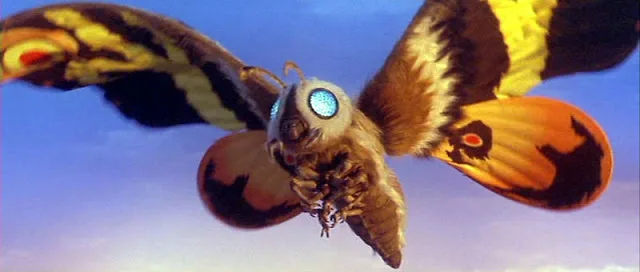
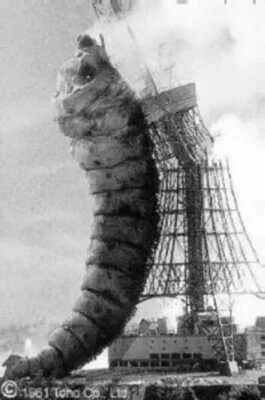
Film have depicted Mothra in various stages of the lepidopteran life cycle: Mothra's mammoth egg is brightly colored in blue and yellow waves. The egg hatches into her larva, a massive brown, segmented caterpillar (resembling a silkworm) with glowing blue—red when angry—eyes. In rare circumstances, twins may emerge from the egg. The caterpillar eventually spins a silken cocoon around itself (the pupa stage), and from this cocoon the imago (adult) Mothra emerges, a gigantic moth-like creature with brightly colored wings. Mothra's life cycle—particularly the tendency of an imago's death to coincide with its larvae hatching—echoes that of the Phoenix, resembling resurrection and suggesting divinity. Despite having wrought destruction worthy of any Toho daikaiju, she is almost always portrayed as a kind and benevolent creature, causing destruction only when acting as protector to her worshipers on Infant Island or to her egg, or as collateral damage while protecting Earth from a greater threat. She has also fertilized her own eggs.
Mothra has proven a formidable adversary in combat: in larval form she may use her silken spray to wrap and immobilize an opponent, and has a knack for biting and clinging to foes' tails. In imago form her powers vary widely from film to film, including very animalistic scratching and dragging, incorporating several bolt and beam weapons in the Heisei era, and often concluding with a poisonous yellow powder (or "scales") —her last defense. Also, Mothra is given a short origin story in the Heisei series, with the Cosmos explaining that Mothra is a genetically engineered creation of the Cosmos made from fusing the remaining life energy of their race with a common lepidoptera.
Film have depicted Mothra in various stages of the lepidopteran life cycle: Mothra's mammoth egg is brightly colored in blue and yellow waves. The egg hatches into her larva, a massive brown, segmented caterpillar (resembling a silkworm) with glowing blue—red when angry—eyes. In rare circumstances, twins may emerge from the egg. The caterpillar eventually spins a silken cocoon around itself (the pupa stage), and from this cocoon the imago (adult) Mothra emerges, a gigantic moth-like creature with brightly colored wings. Mothra's life cycle—particularly the tendency of an imago's death to coincide with its larvae hatching—echoes that of the Phoenix, resembling resurrection and suggesting divinity. Despite having wrought destruction worthy of any Toho daikaiju, she is almost always portrayed as a kind and benevolent creature, causing destruction only when acting as protector to her worshipers on Infant Island or to her egg, or as collateral damage while protecting Earth from a greater threat. She has also fertilized her own eggs.
Mothra has proven a formidable adversary in combat: in larval form she may use her silken spray to wrap and immobilize an opponent, and has a knack for biting and clinging to foes' tails. In imago form her powers vary widely from film to film, including very animalistic scratching and dragging, incorporating several bolt and beam weapons in the Heisei era, and often concluding with a poisonous yellow powder (or "scales") —her last defense. Also, Mothra is given a short origin story in the Heisei series, with the Cosmos explaining that Mothra is a genetically engineered creation of the Cosmos made from fusing the remaining life energy of their race with a common lepidoptera.
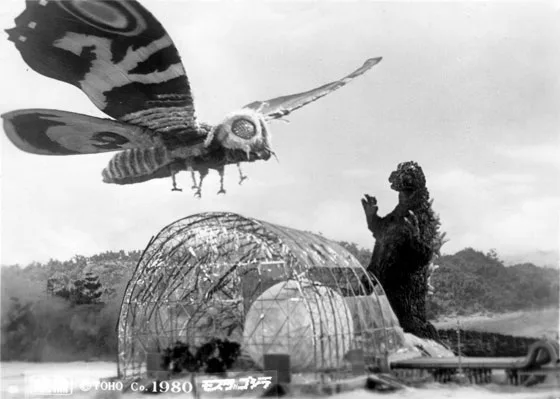
Mothra is one of the most powerful psychics in the Toho universe. She has had the ability to use this power benevolently, to communicate with humans, or aggressively, to destroy her enemies. As suggested earlier, Mothra is assumed to be divine and draws many parallels to the Phoenix, which makes her one of the more powerful kaiju of the Toho universe.
Mothra has become one of Godzilla's more challenging opponents, having achieved the greatest success rate in battle save Godzilla himself: She has once rid of Godzilla in imago form, and twice Godzilla has fought her to the death only later to be bested by her newborn larvae. Mothra has never beaten Godzilla alone (in her Imago Form). Godzilla was defeated by Mothra twin-larvae in Godzilla vs. Mothra in the Showa Era, Imago Mothra and Imago Battra in Godzilla and Mothra: The Battle for Earth in the Heisei series, and the twin-larvae and Kiryu (MechaGodzilla) in the Millennium Series.
Mothra is the only kaiju other than Godzilla, Junior, and Mecha-King Ghidorah to appear in more than one Heisei Godzilla movie as she appears in Godzilla vs. Spacegodzilla when she sends her Cosmos and Fairy Mothras to help out Miki. In the Heisei Era (1984–1995), Mothra gained her own series of films dubbed in America as the Rebirth of Mothra series (Rebirth of Mothra, Rebirth of Mothra II, and Rebirth of Mothra III). In Japan, the series is simply called the "Mothra Series"(Mothra, Mothra 2: Adventure Under the Sea, and Mothra 3: Attack of Grand King Ghidorah). These series are not connected to the Showa, Heisei or Millennium Godzilla movies and are standalone films aiming towards children. The movies start off as the last Mothra puts the last of her energy into a new egg. From this egg hatches Mothra Leo.
Mothra Leo is supposedly, and regarded as, male, as opposed to the pure female Mothras before (though the English dubbing is inconsistent, going back and forth between "she/her" to "he/him", even "it", and therefore its gender is left ambiguous). It also has "ever-increasing energy" which allows it to absorb energy from other sources to become stronger. The 10,000 year-old tree in Rebirth of Mothra allowed Mothra Leo to change into its imago form as "Mothra Leo", thought to be the most powerful Mothra of all time. Mothra Leo gains several forms throughout the Rebirth trilogy, such as Rainbow Mothra, Aqua Mothra, Light Speed Mothra, Armor Mothra, and Eternal Mothra.
Mothra has become one of Godzilla's more challenging opponents, having achieved the greatest success rate in battle save Godzilla himself: She has once rid of Godzilla in imago form, and twice Godzilla has fought her to the death only later to be bested by her newborn larvae. Mothra has never beaten Godzilla alone (in her Imago Form). Godzilla was defeated by Mothra twin-larvae in Godzilla vs. Mothra in the Showa Era, Imago Mothra and Imago Battra in Godzilla and Mothra: The Battle for Earth in the Heisei series, and the twin-larvae and Kiryu (MechaGodzilla) in the Millennium Series.
Mothra is the only kaiju other than Godzilla, Junior, and Mecha-King Ghidorah to appear in more than one Heisei Godzilla movie as she appears in Godzilla vs. Spacegodzilla when she sends her Cosmos and Fairy Mothras to help out Miki. In the Heisei Era (1984–1995), Mothra gained her own series of films dubbed in America as the Rebirth of Mothra series (Rebirth of Mothra, Rebirth of Mothra II, and Rebirth of Mothra III). In Japan, the series is simply called the "Mothra Series"(Mothra, Mothra 2: Adventure Under the Sea, and Mothra 3: Attack of Grand King Ghidorah). These series are not connected to the Showa, Heisei or Millennium Godzilla movies and are standalone films aiming towards children. The movies start off as the last Mothra puts the last of her energy into a new egg. From this egg hatches Mothra Leo.
Mothra Leo is supposedly, and regarded as, male, as opposed to the pure female Mothras before (though the English dubbing is inconsistent, going back and forth between "she/her" to "he/him", even "it", and therefore its gender is left ambiguous). It also has "ever-increasing energy" which allows it to absorb energy from other sources to become stronger. The 10,000 year-old tree in Rebirth of Mothra allowed Mothra Leo to change into its imago form as "Mothra Leo", thought to be the most powerful Mothra of all time. Mothra Leo gains several forms throughout the Rebirth trilogy, such as Rainbow Mothra, Aqua Mothra, Light Speed Mothra, Armor Mothra, and Eternal Mothra.
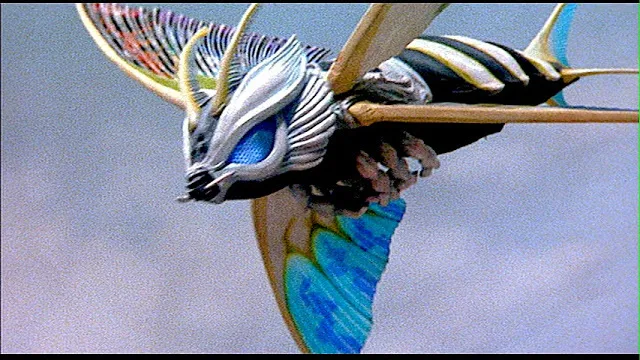
In this series Mothra battled three opponents: Death Ghidorah, a flora-destroying horned beast with three heads; Dagahra, a toxic dragon-like sea creature; and finally Cretaceous King Ghidorah/Grand King Ghidorah, who comes back to Earth to feed of the life force of Japan's children.
In Godzilla Final Wars, Mothra once protected the world in ancient times from the space monster Gigan (this scenario echoes from the Heisei series of Godzilla films where Mothra was portrayed as an ancient defender of the earth and battle Battra, there are also similar cave-drawings of these two events). After being summoned by her Shobijin to help the Earth in a 21st century assault, Mothra flew over Tokyo to aid Godzilla in a battle against Monster X. The Xilien wouldn't let that happen, though, and they sent an improved Gigan to stop Mothra. Mothra is quickly dispatched by Gigan. Mothra quickly recovers and attacks Gigan and Monster X. Gigan resumes his battle with Mothra, using its laser vision beam, turning Mothra to a wall of fire. As a final effort, a burning Mothra flies towards Gigan, and both kaiju are destroyed in a kamakaze attack by the lepidopteran deity. Mothra does survive and she returns to Infant Island at the ending credits. This is the first time imago Mothra returns home directly after a battle involving Godzilla, excluding her brief appearances in Godzilla vs. the Sea Monster.
Unlike the majority of other Toho daikaiju, which are usually performed by stunt actors in a large costume, Mothra has always been operated mechanically as a wire controlled marionette, remote controlled robotic prop, or a combination of the two. Her characteristic chirp was created by speeding up the roar of Anguirus from Godzilla Raids Again. Mothra is known for her habit of dying somehow in many of the movies she has appeared in.
In Godzilla Final Wars, Mothra once protected the world in ancient times from the space monster Gigan (this scenario echoes from the Heisei series of Godzilla films where Mothra was portrayed as an ancient defender of the earth and battle Battra, there are also similar cave-drawings of these two events). After being summoned by her Shobijin to help the Earth in a 21st century assault, Mothra flew over Tokyo to aid Godzilla in a battle against Monster X. The Xilien wouldn't let that happen, though, and they sent an improved Gigan to stop Mothra. Mothra is quickly dispatched by Gigan. Mothra quickly recovers and attacks Gigan and Monster X. Gigan resumes his battle with Mothra, using its laser vision beam, turning Mothra to a wall of fire. As a final effort, a burning Mothra flies towards Gigan, and both kaiju are destroyed in a kamakaze attack by the lepidopteran deity. Mothra does survive and she returns to Infant Island at the ending credits. This is the first time imago Mothra returns home directly after a battle involving Godzilla, excluding her brief appearances in Godzilla vs. the Sea Monster.
Unlike the majority of other Toho daikaiju, which are usually performed by stunt actors in a large costume, Mothra has always been operated mechanically as a wire controlled marionette, remote controlled robotic prop, or a combination of the two. Her characteristic chirp was created by speeding up the roar of Anguirus from Godzilla Raids Again. Mothra is known for her habit of dying somehow in many of the movies she has appeared in.
Popularity
Toho had intended to follow 1989's Godzilla vs. Biollante with a revival of Mothra in her own spin-off film, Mothra vs. Bagan, for 1990 release. However, following the disappointing box office performance of Biollante, Toho discarded the project in favor of another Godzilla film, Godzilla vs. King Ghidorah (1991). A 1992 survey revealed that Mothra was Toho's most popular daikaiju among women, an observation which inspired Toho to again revise its plans, abandoning a proposed sequel to King Ghidorah in favor of a Godzilla/Mothra feature. Following the end of the Heisei Godzilla series, Toho produced a trilogy of Mothra films, known in the U.S. as Rebirth of Mothra (1996–1998). Mothra thus became the first Toho daikaiju to lead its own film(s) after its incorporation into the Godzilla franchise.
Toho had intended to follow 1989's Godzilla vs. Biollante with a revival of Mothra in her own spin-off film, Mothra vs. Bagan, for 1990 release. However, following the disappointing box office performance of Biollante, Toho discarded the project in favor of another Godzilla film, Godzilla vs. King Ghidorah (1991). A 1992 survey revealed that Mothra was Toho's most popular daikaiju among women, an observation which inspired Toho to again revise its plans, abandoning a proposed sequel to King Ghidorah in favor of a Godzilla/Mothra feature. Following the end of the Heisei Godzilla series, Toho produced a trilogy of Mothra films, known in the U.S. as Rebirth of Mothra (1996–1998). Mothra thus became the first Toho daikaiju to lead its own film(s) after its incorporation into the Godzilla franchise.
Abilities
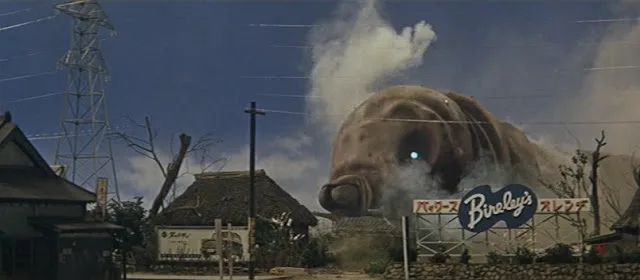
As a larva, Mothra sprays her opponents with silk as a ranged attack (to entrap or disorient an enemy). She also uses her mandibles for a close combat bite. (Mothra has a habit of biting opponents' tails, although it is rarely effective and, predictably, is usually self-defeating.) As an adult, her wings can (and generally do) create gales which tear apart buildings and send other kaiju flying. Her great bulk of a body is commonly used to her advantage in battle to slam into opponents (both in larva and adult form), and her surprising levels of strength can help her to drag and even lift monsters like Godzilla. Her final strategy is to emit "scales", a yellow poisonous powder that can hopefully asphyxiate an enemy. She only uses that attack when she knows she is going to die, though, because the extreme loss of scales will cause her to lose her flight.
The Heisei version of Mothra had some differences. She could now fire a beam of energy from her antennae, and fire arcs of lightning from her wings, or keep it in her body to release to another through touch. The powder now had a different effect; It would act as a 3-D mirror to trap energy blasts, making them rebound over whatever was inside the cloud of powder over and over again. This proved very effective in turning Godzilla's own atomic breath against him. Godzilla's Nuclear Pulse wasn't reflected by her mirror and she was thrown back, possibly because her mirror can't reflect energy attacks if it is able to pass around her mirror.
In the Mothra Trilogy, Mothra displayed a wide use of energy-projection abilities; ranging from triple prismatic beams from her forehead, to energized tackles, to her Sun Strike Buster, a very potent attack that comes from the sky like a sacred lightning bolt. Mothra Leo, her offspring and successor, shared her energy powers and also possessed the ability to gain alternate forms as a means of adapting to his opponent's fighting styles.
In GMK Mothra was able to shoot poison darts from her abdomen but she lacked both her hurricane force winds and her poison powder. In both Tokyo SOS and Final Wars, Mothra's powder was able to redirect both energy and physical projectiles back to their original senders.
As a larva, Mothra sprays her opponents with silk as a ranged attack (to entrap or disorient an enemy). She also uses her mandibles for a close combat bite. (Mothra has a habit of biting opponents' tails, although it is rarely effective and, predictably, is usually self-defeating.) As an adult, her wings can (and generally do) create gales which tear apart buildings and send other kaiju flying. Her great bulk of a body is commonly used to her advantage in battle to slam into opponents (both in larva and adult form), and her surprising levels of strength can help her to drag and even lift monsters like Godzilla. Her final strategy is to emit "scales", a yellow poisonous powder that can hopefully asphyxiate an enemy. She only uses that attack when she knows she is going to die, though, because the extreme loss of scales will cause her to lose her flight.
The Heisei version of Mothra had some differences. She could now fire a beam of energy from her antennae, and fire arcs of lightning from her wings, or keep it in her body to release to another through touch. The powder now had a different effect; It would act as a 3-D mirror to trap energy blasts, making them rebound over whatever was inside the cloud of powder over and over again. This proved very effective in turning Godzilla's own atomic breath against him. Godzilla's Nuclear Pulse wasn't reflected by her mirror and she was thrown back, possibly because her mirror can't reflect energy attacks if it is able to pass around her mirror.
In the Mothra Trilogy, Mothra displayed a wide use of energy-projection abilities; ranging from triple prismatic beams from her forehead, to energized tackles, to her Sun Strike Buster, a very potent attack that comes from the sky like a sacred lightning bolt. Mothra Leo, her offspring and successor, shared her energy powers and also possessed the ability to gain alternate forms as a means of adapting to his opponent's fighting styles.
In GMK Mothra was able to shoot poison darts from her abdomen but she lacked both her hurricane force winds and her poison powder. In both Tokyo SOS and Final Wars, Mothra's powder was able to redirect both energy and physical projectiles back to their original senders.
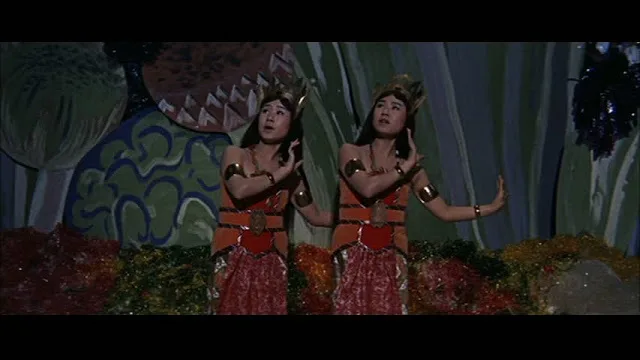
Mothra's Fairies (Shōbijin, Cosmos, and Elias)
Mothra is usually accompanied by two tiny priestesses or fairies, often called the shōbijin (小美人, "small beauties"), who also speak for her. For Mothra's first three film appearances these twin fairies were played by the Peanuts. In Mothra they demonstrate telepathic ability, within speaking range with people and over great distances with Mothra. They explain that while they call to Mothra in prayer and song, they and Mothra are also connected on some deeper level beyond their control, and it is this connection that impels Mothra to find them no matter where they are. These qualities are part of the continuity of all subsequent Mothra appearances. In Mothra vs. Godzilla the Shobijin also demonstrate teleportation, when trying to escape from Kumayama and Torahata. In Ghidorah, the Three-Headed Monster the girls translate not only Mothra's chirps but an entire conversation among three daikaiju. Decades later, in Godzilla: Tokyo SOS, two other shobijin (portrayed by Masami Nagasawa and Chihiro Ôtsuka) demonstrate telekinesis as well.
In the Godzilla films of the 1990s Mothra's priestesses (played by Keiko Imamura and Sayaka Osawa) identify themselves as Earth's Cosmos, who claim to have been created by the very life force of Earth, along with Mothra and Battra—a "Black Mothra" (as described in Godzilla and Mothra: The Battle for Earth) or "Battle Mothra" (as described in the Super Godzilla video game manual). The Cosmos speak not only for Battra and Mothra, but for the living Earth as well. The Cosmos say that Battra was first created by the Earth to balance the ecosystem, which was disrupted by the climate-altering device of an advanced civilization, 12,000 years ago. However, Battra proved to be a little too enthusiastic about its task, and not only destroyed the things of man, but of the natural order as well. The first Mothra was then created to restore the true balance, and stop Battra's rampage. The Cosmos revere both Mothra and Battra as two different divine forces of nature. They act concerned when Battra is injured, and are pleased when Mothra finds a nonviolent method of stopping Battra, "making friends", as they say in the film. They know when Battra has awoken, and what his tasks and motivations are, but Battra does not appear motivated to seek them out, unlike Mothra, who seems compelled to protect them, and talks to them directly.
In the Rebirth of Mothra trilogy, made in the late 1990s, Mothra's priestesses were the Elias; the Elias differ from earlier incarnations in that they are not mindlinked twins but individual persons, Moll (or Moru or Mona) and Lora. They are also seen to have an older sister, a dark Elias called Belvera. In addition to accompanying Mothra, the Elias would also ride smaller offspring called Fairy Mothras. Mothra would reprise the role of ancient guardian, though with only a passing homage to the Cosmos, (who were the twins from Gamera 3: Awakening of Irys) in Godzilla, Mothra and King Ghidorah: Giant Monsters All-Out Attack.
Mothra is usually accompanied by two tiny priestesses or fairies, often called the shōbijin (小美人, "small beauties"), who also speak for her. For Mothra's first three film appearances these twin fairies were played by the Peanuts. In Mothra they demonstrate telepathic ability, within speaking range with people and over great distances with Mothra. They explain that while they call to Mothra in prayer and song, they and Mothra are also connected on some deeper level beyond their control, and it is this connection that impels Mothra to find them no matter where they are. These qualities are part of the continuity of all subsequent Mothra appearances. In Mothra vs. Godzilla the Shobijin also demonstrate teleportation, when trying to escape from Kumayama and Torahata. In Ghidorah, the Three-Headed Monster the girls translate not only Mothra's chirps but an entire conversation among three daikaiju. Decades later, in Godzilla: Tokyo SOS, two other shobijin (portrayed by Masami Nagasawa and Chihiro Ôtsuka) demonstrate telekinesis as well.
In the Godzilla films of the 1990s Mothra's priestesses (played by Keiko Imamura and Sayaka Osawa) identify themselves as Earth's Cosmos, who claim to have been created by the very life force of Earth, along with Mothra and Battra—a "Black Mothra" (as described in Godzilla and Mothra: The Battle for Earth) or "Battle Mothra" (as described in the Super Godzilla video game manual). The Cosmos speak not only for Battra and Mothra, but for the living Earth as well. The Cosmos say that Battra was first created by the Earth to balance the ecosystem, which was disrupted by the climate-altering device of an advanced civilization, 12,000 years ago. However, Battra proved to be a little too enthusiastic about its task, and not only destroyed the things of man, but of the natural order as well. The first Mothra was then created to restore the true balance, and stop Battra's rampage. The Cosmos revere both Mothra and Battra as two different divine forces of nature. They act concerned when Battra is injured, and are pleased when Mothra finds a nonviolent method of stopping Battra, "making friends", as they say in the film. They know when Battra has awoken, and what his tasks and motivations are, but Battra does not appear motivated to seek them out, unlike Mothra, who seems compelled to protect them, and talks to them directly.
In the Rebirth of Mothra trilogy, made in the late 1990s, Mothra's priestesses were the Elias; the Elias differ from earlier incarnations in that they are not mindlinked twins but individual persons, Moll (or Moru or Mona) and Lora. They are also seen to have an older sister, a dark Elias called Belvera. In addition to accompanying Mothra, the Elias would also ride smaller offspring called Fairy Mothras. Mothra would reprise the role of ancient guardian, though with only a passing homage to the Cosmos, (who were the twins from Gamera 3: Awakening of Irys) in Godzilla, Mothra and King Ghidorah: Giant Monsters All-Out Attack.
Mothra's songs
The fairies' famous song "Mosura No Uta" ("Mothra's Song") was written in Indonesian, though the Shobijin often sing Japanese approximations to the original lyrics. The song was composed by Yuji Koseki. Other verses and entirely new songs (in Japanese) have been added by various composers over Mothra's film history. The Shobijin have also been portrayed by Pair Bambi (Godzilla vs. the Sea Monster) and Megumi Kobayashi and Sayako Yamaguchi (the Mothra Trilogy).
There are many other Mothra songs that have been used over the years all the way from the Showa series to the Millennium series:
"Mahara Mothra" - Godzilla vs. Mothra (1964), Godzilla and Mothra: The Battle for Earth (1992)
"Sacred Springs" - Godzilla vs. Mothra (1964), Godzilla and Mothra: The Battle for Earth (1992)
"Mothra's Song" - Godzilla vs. the Sea Monster (1966)
"The Song of Prayer" - Rebirth of Mothra (1996)
"Mothra Leo" - Rebirth of Mothra (1996)
"Haora Mothra" - Rebirth of Mothra 3 (1998)
Outside of Kaiju Films, the Mothra Songs have received a lot of popular acclaim and have been performed by many musical groups as well as individual artists.
Covers by musical groups:
"Mothra Song " – Deja Vu
"Mothra Song" – All-Male Japanese Choir
Broadway: Mothra is given mention in the song "Two by Two" in the musical Book of Mormon. Two characters are assigned their mission in Japan, and they exclaim "Japan...Home of soy sauce..and Mothra!"
Heavy metal band Anvil has a song about Mothra on their 1982 album Metal on Metal.
Canadian artist C.J. Harder has a song called Mothra, a track of his Fear Of A Digital Planet album. The song has recurring child vocals, singing Mosura No Uta.
Mothra's character and personality
Mothra's character/personality has developed substantially over the years. For instance, when she appeared in her first movie, she only protected her own people on Infant Island and did not care for the entire world like the later Heisei and Rebirth versions did. In the Heisei Era, Mothra became the environmental savior as well as the human savior of the Earth—which means that she was the guardian of the planet as stated by the Cosmos in Godzilla and Mothra: The Battle for Earth. In the Shinsei series though, Mothra reverted back to her original self as she was in the Showa series. Mothra is an unusual kaiju (in the Toho universe—Gamera fulfills this role in his own long-running series) in that she battles on behalf of the betterment of the Earth, and for years has continued to establish that pureness of heart in her character. In the trilogy, Mothra even sacrificed her own life for the sake of other guardian monsters.
The fairies' famous song "Mosura No Uta" ("Mothra's Song") was written in Indonesian, though the Shobijin often sing Japanese approximations to the original lyrics. The song was composed by Yuji Koseki. Other verses and entirely new songs (in Japanese) have been added by various composers over Mothra's film history. The Shobijin have also been portrayed by Pair Bambi (Godzilla vs. the Sea Monster) and Megumi Kobayashi and Sayako Yamaguchi (the Mothra Trilogy).
There are many other Mothra songs that have been used over the years all the way from the Showa series to the Millennium series:
"Mahara Mothra" - Godzilla vs. Mothra (1964), Godzilla and Mothra: The Battle for Earth (1992)
"Sacred Springs" - Godzilla vs. Mothra (1964), Godzilla and Mothra: The Battle for Earth (1992)
"Mothra's Song" - Godzilla vs. the Sea Monster (1966)
"The Song of Prayer" - Rebirth of Mothra (1996)
"Mothra Leo" - Rebirth of Mothra (1996)
"Haora Mothra" - Rebirth of Mothra 3 (1998)
Outside of Kaiju Films, the Mothra Songs have received a lot of popular acclaim and have been performed by many musical groups as well as individual artists.
Covers by musical groups:
"Mothra Song " – Deja Vu
"Mothra Song" – All-Male Japanese Choir
Broadway: Mothra is given mention in the song "Two by Two" in the musical Book of Mormon. Two characters are assigned their mission in Japan, and they exclaim "Japan...Home of soy sauce..and Mothra!"
Heavy metal band Anvil has a song about Mothra on their 1982 album Metal on Metal.
Canadian artist C.J. Harder has a song called Mothra, a track of his Fear Of A Digital Planet album. The song has recurring child vocals, singing Mosura No Uta.
Mothra's character and personality
Mothra's character/personality has developed substantially over the years. For instance, when she appeared in her first movie, she only protected her own people on Infant Island and did not care for the entire world like the later Heisei and Rebirth versions did. In the Heisei Era, Mothra became the environmental savior as well as the human savior of the Earth—which means that she was the guardian of the planet as stated by the Cosmos in Godzilla and Mothra: The Battle for Earth. In the Shinsei series though, Mothra reverted back to her original self as she was in the Showa series. Mothra is an unusual kaiju (in the Toho universe—Gamera fulfills this role in his own long-running series) in that she battles on behalf of the betterment of the Earth, and for years has continued to establish that pureness of heart in her character. In the trilogy, Mothra even sacrificed her own life for the sake of other guardian monsters.
Film appearances
Mothra (1961)
Godzilla vs. Mothra (1964)
Ghidorah, the Three-Headed Monster (1964)
Godzilla vs. the Sea Monster (1966)
Destroy All Monsters (1968)
Godzilla vs. Gigan (1972) (stock footage)
Godzilla and Mothra: The Battle for Earth (1992)
Monster Planet Of Godzilla (1994)
Godzilla vs. SpaceGodzilla (1994) (also as "Fairy Mothra")
Rebirth of Mothra (1996) (also as "Mothra Leo")
Godzilla Island (1997)
Rebirth of Mothra II (1997) (as "Mothra Leo", "Rainbow Mothra", and "Aqua Mothra")
Rebirth of Mothra III (1998) (as "Rainbow Mothra", "Light Speed Mothra", "Armor Mothra", and "Eternal Mothra")
Godzilla, Mothra and King Ghidorah: Giant Monsters All-Out Attack (2001)
Godzilla Against Mechagodzilla (2002) (stock footage)
Godzilla: Tokyo S.O.S. (2003)
Godzilla: Final Wars (2004)
Mothra (1961)
Godzilla vs. Mothra (1964)
Ghidorah, the Three-Headed Monster (1964)
Godzilla vs. the Sea Monster (1966)
Destroy All Monsters (1968)
Godzilla vs. Gigan (1972) (stock footage)
Godzilla and Mothra: The Battle for Earth (1992)
Monster Planet Of Godzilla (1994)
Godzilla vs. SpaceGodzilla (1994) (also as "Fairy Mothra")
Rebirth of Mothra (1996) (also as "Mothra Leo")
Godzilla Island (1997)
Rebirth of Mothra II (1997) (as "Mothra Leo", "Rainbow Mothra", and "Aqua Mothra")
Rebirth of Mothra III (1998) (as "Rainbow Mothra", "Light Speed Mothra", "Armor Mothra", and "Eternal Mothra")
Godzilla, Mothra and King Ghidorah: Giant Monsters All-Out Attack (2001)
Godzilla Against Mechagodzilla (2002) (stock footage)
Godzilla: Tokyo S.O.S. (2003)
Godzilla: Final Wars (2004)
- Published on
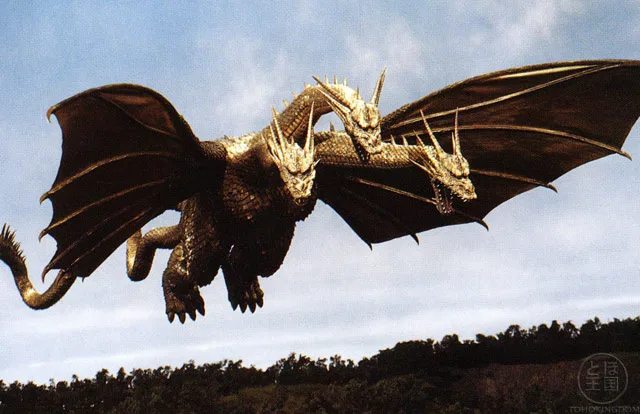
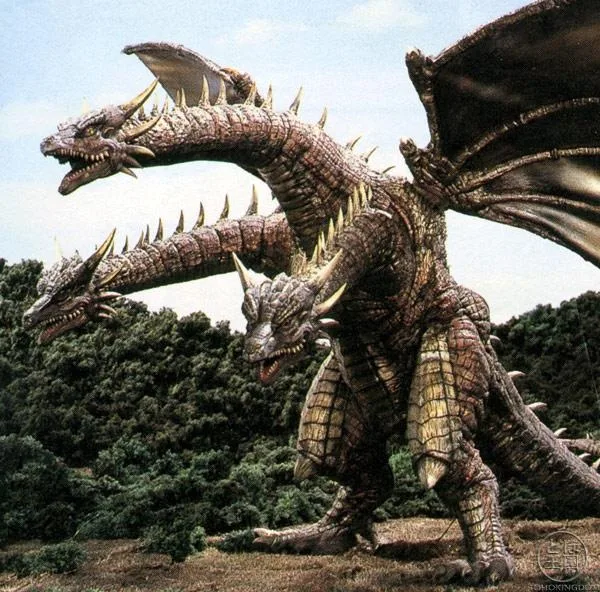
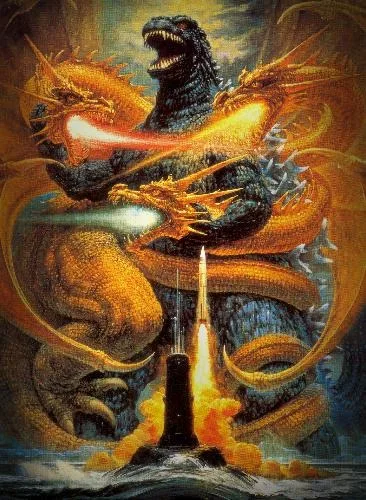
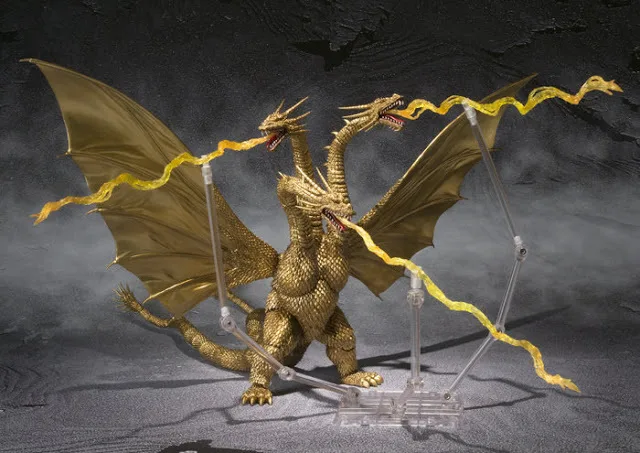
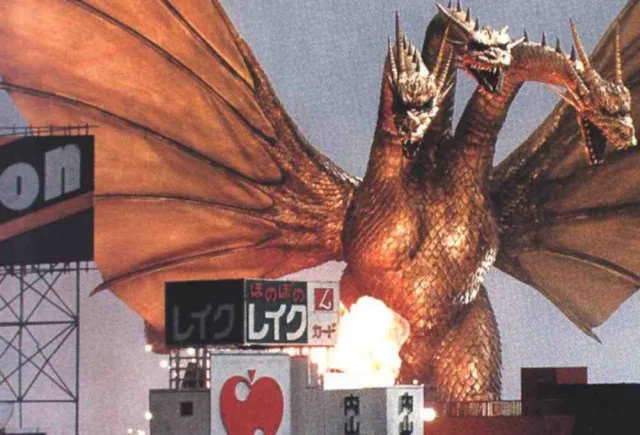
King Ghidorah (キングギドラ Kingu Gidora) (also known as King Ghidrah, King Ghidora and Monster Zero) is a kaiju, a fictional Japanese monster featured in several of Toho Studios' Godzilla films. Ghidorah appears as an armless, three-headed dragon with large wings and two tails.King Ghidorah is among the most powerful creatures in daikaiju eiga with a reputation that has earned it the title "The King of Terror". He is often considered Godzilla's archenemy. Usually, King Ghidorah is so destructive and powerful, that Godzilla is often required to team-up with another monster, even several monsters, before engaging the three-headed dragon of terror and destruction in battle. One exception to this theme occurred in the 1991 film Godzilla vs. King Ghidorah, which included an extra powerful Godzilla defeating King Ghidorah, as well as severing King Ghidorah's middle head. Despite this setback, however, King Ghidorah is one of the few daikaiju who is more than a match for Godzilla under most circumstances, though there have been other monsters such as Hedorah, Destoroyah, SpaceGodzilla, and MechaGodzilla 2 who have been equally formidable opponents for Godzilla. King Ghidorah is also one of the monsters that are most often mind controlled; it acts completely autonomously in three movies, in other appearances being controlled for most of its screen time by aliens.
Appearances
Shōwa series
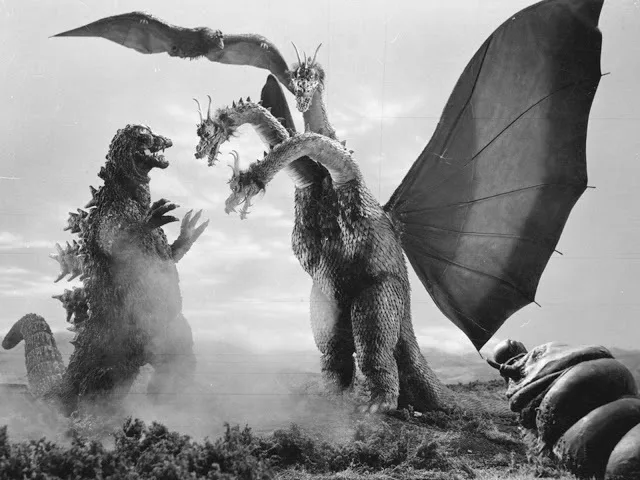
Ghidorah, the Three-Headed Monster (1964): The original version of the monster is an alien who travels to Earth in a magnetic meteorite, and devastates Japan until repelled by Godzilla, Rodan, and Mothra.
Invasion of the Astro-Monster (1965): Ghidorah is now the mind-controlled pawn of aliens from "Planet X", and refer to Ghidorah as "Monster Zero". The "Xians" covet Earth's water resources and also take control of Godzilla and Rodan in an attempt to conquer the planet. When Earth forces free Godzilla and Rodan, the pair drive Ghidorah off into space.
Destroy All Monsters (1968): Set in the future, Ghidorah is controlled by the alien Kilaaks. The monster is eventually killed by Godzilla and several other monsters.
Godzilla vs. Gigan (1972): Set in the present day, Ghidorah teams with fellow monster Gigan until both are driven away by Godzilla and Anguirus.
Shōwa series
Ghidorah, the Three-Headed Monster (1964): The original version of the monster is an alien who travels to Earth in a magnetic meteorite, and devastates Japan until repelled by Godzilla, Rodan, and Mothra.
Invasion of the Astro-Monster (1965): Ghidorah is now the mind-controlled pawn of aliens from "Planet X", and refer to Ghidorah as "Monster Zero". The "Xians" covet Earth's water resources and also take control of Godzilla and Rodan in an attempt to conquer the planet. When Earth forces free Godzilla and Rodan, the pair drive Ghidorah off into space.
Destroy All Monsters (1968): Set in the future, Ghidorah is controlled by the alien Kilaaks. The monster is eventually killed by Godzilla and several other monsters.
Godzilla vs. Gigan (1972): Set in the present day, Ghidorah teams with fellow monster Gigan until both are driven away by Godzilla and Anguirus.
Heisei series
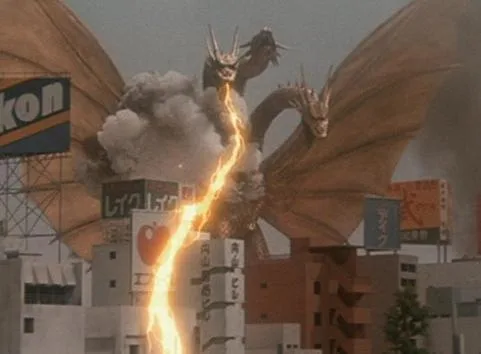
Godzilla vs. King Ghidorah (1991): Time-travelers from the 23rd century (called "Futurians") travel to the past to release three genetically-engineered bat-like creatures called "Dorats" at the location at which a Godzillasaurus was to be exposed to radiation and become Godzilla. The irradiated Dorats fuse into King Ghidorah, which the Futurians then use to devastate present-day Japan. Godzilla eventually battles and cripples Ghidorah, with the wounded monster falling into the ocean. The Futurians, however, locate Ghidorah in the future, and using advanced technology create the cyborg "Mecha-King Ghidorah". The monster battles Godzilla to a standstill, before both disappear into the ocean.
Godzilla vs. King Ghidorah (1991): Time-travelers from the 23rd century (called "Futurians") travel to the past to release three genetically-engineered bat-like creatures called "Dorats" at the location at which a Godzillasaurus was to be exposed to radiation and become Godzilla. The irradiated Dorats fuse into King Ghidorah, which the Futurians then use to devastate present-day Japan. Godzilla eventually battles and cripples Ghidorah, with the wounded monster falling into the ocean. The Futurians, however, locate Ghidorah in the future, and using advanced technology create the cyborg "Mecha-King Ghidorah". The monster battles Godzilla to a standstill, before both disappear into the ocean.
Millennium series
Godzilla, Mothra and King Ghidorah: Giant Monsters All-Out Attack (2001): Godzilla again attacks Japan and is repelled by the combined might of the world guardian monsters (Baragon, Mothra, and Ghidorah) and the Japan Self-Defense Forces.
Godzilla: Final Wars (2004): Godzilla defeats every monster ever encountered before battling "Monster X", a disguise for a version of "Keizer Ghidorah".
Godzilla, Mothra and King Ghidorah: Giant Monsters All-Out Attack (2001): Godzilla again attacks Japan and is repelled by the combined might of the world guardian monsters (Baragon, Mothra, and Ghidorah) and the Japan Self-Defense Forces.
Godzilla: Final Wars (2004): Godzilla defeats every monster ever encountered before battling "Monster X", a disguise for a version of "Keizer Ghidorah".
Other Appearances
The monster also featured in two films in the Mothra trilogy, both of which involved time-travel and different versions of Ghidorah:
Rebirth of Mothra (1996): A version of Ghidorah, referred to as "Desghidorah" (or Death Ghidorah) appeared as a black, quadrupedal, three-headed extraterrestrial dragon. Freed from imprisonment in a prehistoric cave, the creature battles both an adult and larvae form of Mothra before being entombed once again.
Rebirth of Mothra III (1998): Ghidorah appears in a more traditional form known as "Grand King Ghidorah" and battles Mothra Leo, who undergoes several transformations to match the monster.
Abilities
King Ghidorah has had a number of changes made to himself over the years, but most of his traditional battle characteristics have remained the same. His different forms in the different movies have their own abilities.
King Ghidorah flies at the speed of Mach 3, is able to fire Lightning Beams, which are called Gravity beams, from his mouths, is able to create hurricane winds from his wings, and uses his necks to constrict an opponent.
The monster also featured in two films in the Mothra trilogy, both of which involved time-travel and different versions of Ghidorah:
Rebirth of Mothra (1996): A version of Ghidorah, referred to as "Desghidorah" (or Death Ghidorah) appeared as a black, quadrupedal, three-headed extraterrestrial dragon. Freed from imprisonment in a prehistoric cave, the creature battles both an adult and larvae form of Mothra before being entombed once again.
Rebirth of Mothra III (1998): Ghidorah appears in a more traditional form known as "Grand King Ghidorah" and battles Mothra Leo, who undergoes several transformations to match the monster.
Abilities
King Ghidorah has had a number of changes made to himself over the years, but most of his traditional battle characteristics have remained the same. His different forms in the different movies have their own abilities.
King Ghidorah flies at the speed of Mach 3, is able to fire Lightning Beams, which are called Gravity beams, from his mouths, is able to create hurricane winds from his wings, and uses his necks to constrict an opponent.
Mecha-King Ghidorah
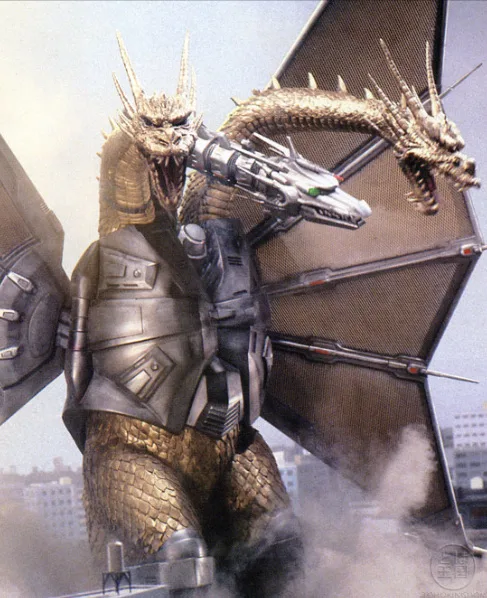
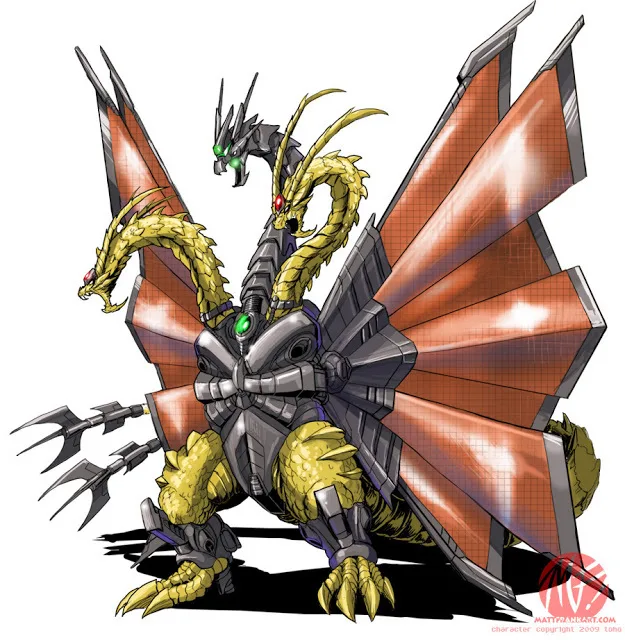
Mecha-King Ghidorah (メカキングギドラ, Meka Kingu Gidora) is a mechanically modified Ghidorah that appeared in the 1991 film Godzilla vs. King Ghidorah. He has a futuristic and mechanical look, with his middle head mechanized as well as his wings, torso and a few other areas. He's considerably more powerful than the purely organic King Ghidorah.
History
Godzilla vs. King Ghidorah
Upon defeating King Ghidorah and sending the brass behemoth to his doom in the depths of the sea, Godzilla began to wreck havoc throughout Japan. Emmy Kano, a Futurian who rebelled against her belligerent crew, was asked if King Ghidorah could be revived in the 23rd century. If possible, he could be brought back to the present and used as an anti-Godzilla weapon to protect Japan. Emmy agreed with this request and ventured into the future using the time machine KIDS.
As Godzilla continued his rampage through the center of Tokyo, he suddenly heard a sound in the sky. King Ghidorah, now the cyborg Mecha-King Ghidorah, materialized in a flash of pulsing energy. Piloted by Emmy and reinforced with several robotic segments, Mecha-King Ghidorah easily outclassed his predecessor. He fired his gravity beams and triple laser beam at his foe. Though Godzilla managed to fire his thermonuclear breath in retaliation, the gray gargantuan was ultimately sent crashing into the surrounding buildings. Godzilla managed to regain his balance and damage both of Mecha-King Ghidorah's wings. It was time for Emmy to reveal the cyclopean cyborg's most powerful technique. Energy-conducting capture cables were fired, as was the machine hand restraint. Mecha-King Ghidorah lifted Godzilla into the sky and over the sea, but both were sent crashing into the waves when Godzilla fired his thermonuclear ray at his captor. Emmy quickly escaped in KIDS, leaving both monsters trapped on the ocean floor.
Meanwhile, beneath the surface of the sea, Godzilla's eyes glowed eerily. He released his thermonuclear ray into the azure abyss, for he would escape from its restraints and return to terrorize the world another day.
Godzilla vs. Mechagodzilla II and Godzilla vs. SpaceGodzilla
The technology used in Mecha-King Ghidorah was later used to create MechaGodzilla 2 and Moguera.
Mecha-King Ghidorah (メカキングギドラ, Meka Kingu Gidora) is a mechanically modified Ghidorah that appeared in the 1991 film Godzilla vs. King Ghidorah. He has a futuristic and mechanical look, with his middle head mechanized as well as his wings, torso and a few other areas. He's considerably more powerful than the purely organic King Ghidorah.
History
Godzilla vs. King Ghidorah
Upon defeating King Ghidorah and sending the brass behemoth to his doom in the depths of the sea, Godzilla began to wreck havoc throughout Japan. Emmy Kano, a Futurian who rebelled against her belligerent crew, was asked if King Ghidorah could be revived in the 23rd century. If possible, he could be brought back to the present and used as an anti-Godzilla weapon to protect Japan. Emmy agreed with this request and ventured into the future using the time machine KIDS.
As Godzilla continued his rampage through the center of Tokyo, he suddenly heard a sound in the sky. King Ghidorah, now the cyborg Mecha-King Ghidorah, materialized in a flash of pulsing energy. Piloted by Emmy and reinforced with several robotic segments, Mecha-King Ghidorah easily outclassed his predecessor. He fired his gravity beams and triple laser beam at his foe. Though Godzilla managed to fire his thermonuclear breath in retaliation, the gray gargantuan was ultimately sent crashing into the surrounding buildings. Godzilla managed to regain his balance and damage both of Mecha-King Ghidorah's wings. It was time for Emmy to reveal the cyclopean cyborg's most powerful technique. Energy-conducting capture cables were fired, as was the machine hand restraint. Mecha-King Ghidorah lifted Godzilla into the sky and over the sea, but both were sent crashing into the waves when Godzilla fired his thermonuclear ray at his captor. Emmy quickly escaped in KIDS, leaving both monsters trapped on the ocean floor.
Meanwhile, beneath the surface of the sea, Godzilla's eyes glowed eerily. He released his thermonuclear ray into the azure abyss, for he would escape from its restraints and return to terrorize the world another day.
Godzilla vs. Mechagodzilla II and Godzilla vs. SpaceGodzilla
The technology used in Mecha-King Ghidorah was later used to create MechaGodzilla 2 and Moguera.
- Published on
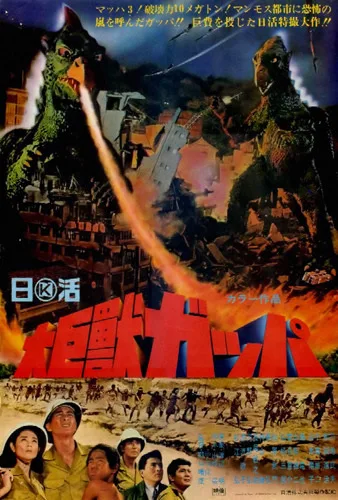
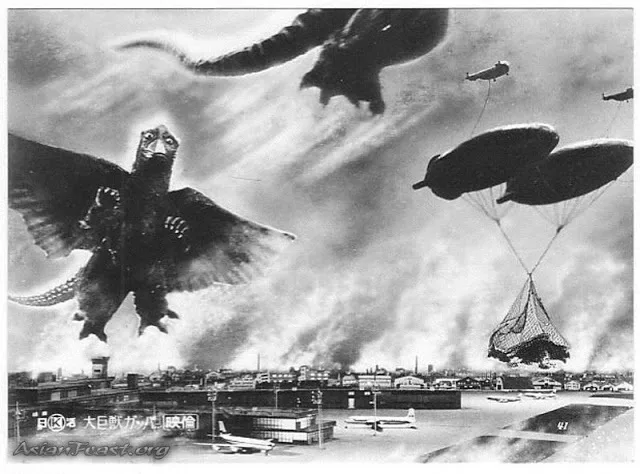
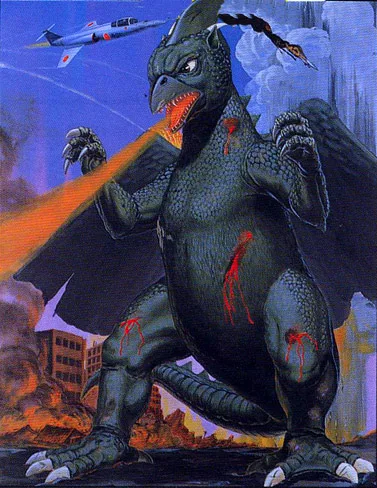
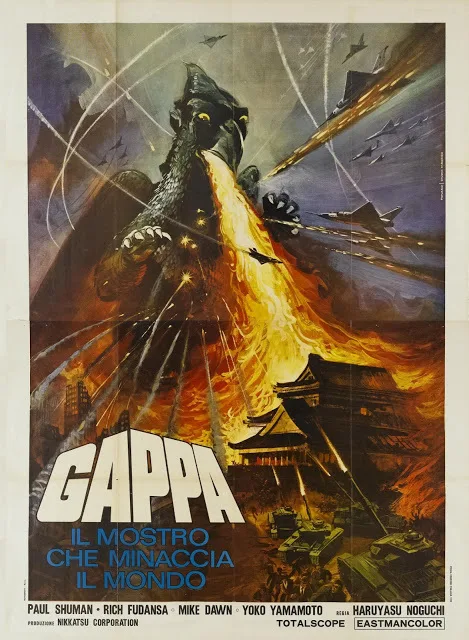
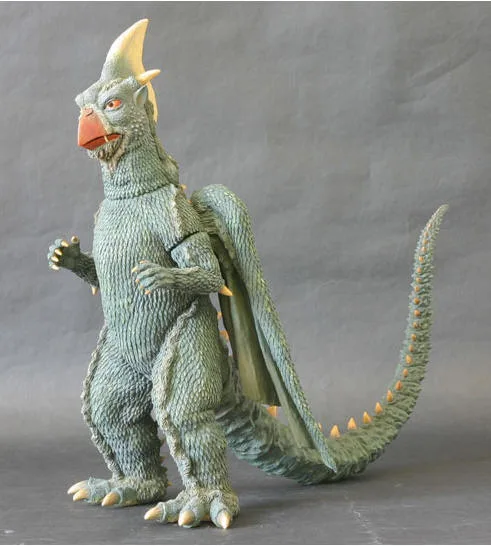
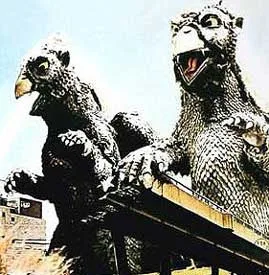
Daikyojū Gappa (大巨獣ガッパ "Gappa, The Colossal Beast") is a 1967 Kaiju film. This Japanese film was produced by Nikkatsu Corporation, and was their only foray into the giant monster genre. The foreign sales title for the film was Gappa: The Triphibian Monster, and was dubbed into English (considered the "International Version"). The film was picked up by American International Pictures and released directly to television in the US under their American International Television banner, and retitled Monster from a Prehistoric Planet. This version was one of many films syndicated to broadcasters nationwide by AIP-TV, and became a staple for Horror Hosts on television stations from San Francisco to New York City from the late 1960s through early 1980s.
Plot
An expedition from Tokyo heads to Obelisk Island, which the greedy Mr. Funazu, president of "Playmate Magazine", wants to turn into a resort. The natives of Obelisk welcome the expedition, but two members, Hiroshi and Itoko, venture into a forbidden area despite the pleas of a native boy named Saki. They enter a cavern blocked by a fallen statue and find a giant egg, out of which hatches a baby monster, a "bird-lizard", referred to as a "Gappa". The natives plead with the skeptical scientists not to take the baby away, lest it anger the baby's parents. Sure enough, they take the baby away, and soon, inside the caverns, its two parents rise from the underground waters beneath the volcano, destroying everything in their path. Saki, the only survivor, is rescued by an American navy fleet and brought back to Japan.
Meanwhile, back in Japan, the baby "bird-lizard" is making world headlines, not to mention being experimented on by scientists. To the shock of the expedition members there is news of two giant flying creatures appearing over Sagami Bay. The Gappa parents ravage cities looking for their offspring, and are impervious to military weapons. Hiroshi, Itoko and Professor Tonooka (a scientist from the expedition) realize that the "Gappas" aren't a legend after all. They, and Saki, try to convince the headstrong Mr. Funazu to let go of the baby and return it to its parents. Will they convince him before the Gappas destroy Japan and perhaps the world?
An expedition from Tokyo heads to Obelisk Island, which the greedy Mr. Funazu, president of "Playmate Magazine", wants to turn into a resort. The natives of Obelisk welcome the expedition, but two members, Hiroshi and Itoko, venture into a forbidden area despite the pleas of a native boy named Saki. They enter a cavern blocked by a fallen statue and find a giant egg, out of which hatches a baby monster, a "bird-lizard", referred to as a "Gappa". The natives plead with the skeptical scientists not to take the baby away, lest it anger the baby's parents. Sure enough, they take the baby away, and soon, inside the caverns, its two parents rise from the underground waters beneath the volcano, destroying everything in their path. Saki, the only survivor, is rescued by an American navy fleet and brought back to Japan.
Meanwhile, back in Japan, the baby "bird-lizard" is making world headlines, not to mention being experimented on by scientists. To the shock of the expedition members there is news of two giant flying creatures appearing over Sagami Bay. The Gappa parents ravage cities looking for their offspring, and are impervious to military weapons. Hiroshi, Itoko and Professor Tonooka (a scientist from the expedition) realize that the "Gappas" aren't a legend after all. They, and Saki, try to convince the headstrong Mr. Funazu to let go of the baby and return it to its parents. Will they convince him before the Gappas destroy Japan and perhaps the world?
Overview
This film was intended as a lighthearted satire of the daikaiju films of the period. This is one of the reasons the film has come under criticism by many people and kaiju fans.[citation needed] But some of the satire is lost in translated overseas prints.
The film's special effects were provided by Akira Watanabe, who had worked as an art director on many tokusatsu films such as the 1957 Toho sci-fi classic, The Mysterians. Although his work is not up to the standards of his colleague Eiji Tsuburaya, he provides some very interesting visuals, such as:
In the scene where the Gappas rise from the ocean into a city, one of the Gappas was carrying an octopus in its mouth, hoping to bring food to its missing offspring, assuming it was found (this scene was meant to be humorous).
One of the Gappas stomps its feet right into the middle of a kabuki theater, with people inside panicking and running.
This film was intended as a lighthearted satire of the daikaiju films of the period. This is one of the reasons the film has come under criticism by many people and kaiju fans.[citation needed] But some of the satire is lost in translated overseas prints.
The film's special effects were provided by Akira Watanabe, who had worked as an art director on many tokusatsu films such as the 1957 Toho sci-fi classic, The Mysterians. Although his work is not up to the standards of his colleague Eiji Tsuburaya, he provides some very interesting visuals, such as:
In the scene where the Gappas rise from the ocean into a city, one of the Gappas was carrying an octopus in its mouth, hoping to bring food to its missing offspring, assuming it was found (this scene was meant to be humorous).
One of the Gappas stomps its feet right into the middle of a kabuki theater, with people inside panicking and running.
Different versions
In the Japanese version, the opening credits and ending were accompanied by a Rock & Roll theme song, "Gappa, The Colossal Beast" (the first and second verses, respectively), and the touching reunion scene near the end had a ballad called "Keep Trying, Baby Gappa!". In all overseas prints, the opening and ending songs were replaced with standard orchestral music, and "Keep Trying, Baby Gappa!" was instrumental.
There was also an urban legend that Nikkatsu's international English prints originally had a racist line, "The monsters are attacking Tokyo. Fortunately they are attacking the Negro section of town." And that the line was changed to "...attacking the poor section of town". In actuality, the line in the AIP-TV version is "attacking the Nikkō region..." — Nikkō is a city known for its beautiful and ancient shrines in the mountains of Tochigi Prefecture, Japan (approximately 140 km north of Tokyo).
In the Japanese version, the opening credits and ending were accompanied by a Rock & Roll theme song, "Gappa, The Colossal Beast" (the first and second verses, respectively), and the touching reunion scene near the end had a ballad called "Keep Trying, Baby Gappa!". In all overseas prints, the opening and ending songs were replaced with standard orchestral music, and "Keep Trying, Baby Gappa!" was instrumental.
There was also an urban legend that Nikkatsu's international English prints originally had a racist line, "The monsters are attacking Tokyo. Fortunately they are attacking the Negro section of town." And that the line was changed to "...attacking the poor section of town". In actuality, the line in the AIP-TV version is "attacking the Nikkō region..." — Nikkō is a city known for its beautiful and ancient shrines in the mountains of Tochigi Prefecture, Japan (approximately 140 km north of Tokyo).
Home Video Release
Officially, the AIP-TV version of the film was first issued in the US by Orion Home Video (the Home Video arm of Orion Pictures, which had taken over the AIP catalogue) in the late 1980s on VHS, and a subsequent Laserdisc release (the latter was a double feature release with Godzilla vs. The Smog Monster issued by Orion and Image Entertainment). AIP's rights for Monster from a Prehistoric Planet (held by Orion Pictures) eventually lapsed into the Public Domain in the US. In the late 1990s, the Home Video rights to the film was licensed directly from Nikkatsu for VHS and (a bare-bones) DVD release by Media Blasters, under the Tokyo Shock label, including both the International English and Japanese language versions (the latter with English subtitles). The original version of the film has been issued twice on DVD in Japan, in 2000 (in a deluxe set with a figure) and 2004 (as a single disc with special features), respectively.
Officially, the AIP-TV version of the film was first issued in the US by Orion Home Video (the Home Video arm of Orion Pictures, which had taken over the AIP catalogue) in the late 1980s on VHS, and a subsequent Laserdisc release (the latter was a double feature release with Godzilla vs. The Smog Monster issued by Orion and Image Entertainment). AIP's rights for Monster from a Prehistoric Planet (held by Orion Pictures) eventually lapsed into the Public Domain in the US. In the late 1990s, the Home Video rights to the film was licensed directly from Nikkatsu for VHS and (a bare-bones) DVD release by Media Blasters, under the Tokyo Shock label, including both the International English and Japanese language versions (the latter with English subtitles). The original version of the film has been issued twice on DVD in Japan, in 2000 (in a deluxe set with a figure) and 2004 (as a single disc with special features), respectively.
- Published on
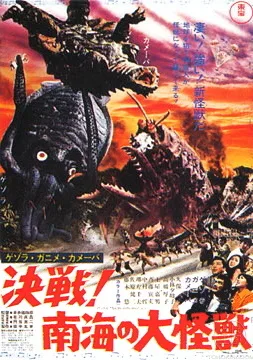
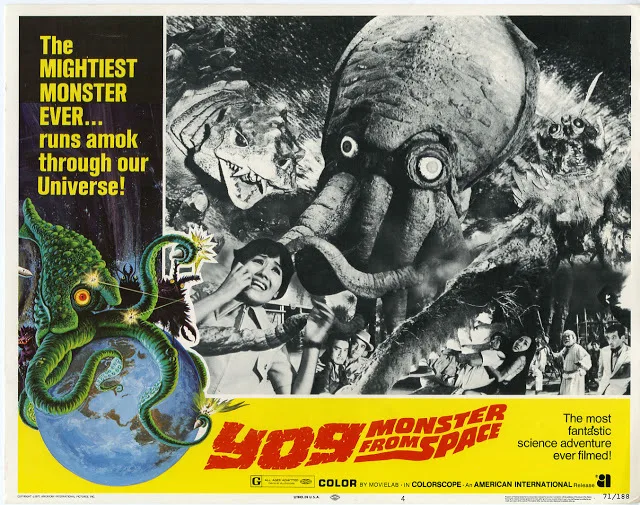
Space Amoeba, released in Japan as Gezora, Ganime, Kamoeba: Decisive Battle! Giant Monsters of the South Seas (ゲゾラ・ガニメ・カメーバ 決戦! 南海の大怪獣 "Gezora Ganime Kameba Kessen! Nankai no Kaiju"), is a 1970 Kaiju film produced and released by Toho Studios. In the USA, American International Pictures released the film as Yog Monster from Space.
This was one of director Ishirō Honda's last giant monster films, and the first such film made after the passing of special effects director Eiji Tsuburaya. This was also the final Toho film for which Sadamasa Arikawa acted as director of special effects. While some fans deride the film as a last gasp of the Golden Age of Kaiju films, others appreciate the fact that the monsters have been scaled down compared to creatures like Godzilla or Rodan, making their interactions with human characters more compelling.
This was one of director Ishirō Honda's last giant monster films, and the first such film made after the passing of special effects director Eiji Tsuburaya. This was also the final Toho film for which Sadamasa Arikawa acted as director of special effects. While some fans deride the film as a last gasp of the Golden Age of Kaiju films, others appreciate the fact that the monsters have been scaled down compared to creatures like Godzilla or Rodan, making their interactions with human characters more compelling.
Story
The Helios 7 space probe is sent on a mission to study the planet Jupiter. While on its outward journey to the gas giant, the probe is overtaken by the Space Amoeba/Yog, a parasitic extraterrestrial. The probe returns to earth and crashes into the South Pacific, where the Amoeba leaves the device and inhabits the body of a cuttlefish, causing it to mutate into what is called "Gezora." The tentacled kaiju begins attacking ships and islands in the area.
A photographer named Kudo and his entourage land on Selga Island for a photoshoot, but their camp is attacked by Gezora. Because of its mutation the creature can create extremely cold temperatures with its body. When the survivors discover that Gezora is vulnerable to high temperatures, Kudo and his friends use a leftover Japanese World War II munitions bunker to set fire to the monster. Severely burned, the creature retreats to the water where it dies.
Later, the Space Amoeba possesses a stone crab, mutating it into "Ganimes" and attacks the surrounding islands. Luckily the humans manage to lour Ganimes into a pit and destroy it with explosives. The Amoeba survies a second time and fleas into the surrounding jungles plotting its revenge.
Space Amoeba decides to control two earth creatures this time. Another Ganimes, and a rock turtle named "Kamoebas." The two monsters raid the human camp. Luckily Kudo realizes the two monsters' weakness: supersonic waves. By releasing a storm of bats, the Amoeba loses control of its creations. Ganimes and Komoebas, no long under control, go beserk and begin to battle as Japanese giant monsters do. The humans, using more explosives, cause the volcano to erupt, engulfing the Space Amoeba and the two monsters.
The Helios 7 space probe is sent on a mission to study the planet Jupiter. While on its outward journey to the gas giant, the probe is overtaken by the Space Amoeba/Yog, a parasitic extraterrestrial. The probe returns to earth and crashes into the South Pacific, where the Amoeba leaves the device and inhabits the body of a cuttlefish, causing it to mutate into what is called "Gezora." The tentacled kaiju begins attacking ships and islands in the area.
A photographer named Kudo and his entourage land on Selga Island for a photoshoot, but their camp is attacked by Gezora. Because of its mutation the creature can create extremely cold temperatures with its body. When the survivors discover that Gezora is vulnerable to high temperatures, Kudo and his friends use a leftover Japanese World War II munitions bunker to set fire to the monster. Severely burned, the creature retreats to the water where it dies.
Later, the Space Amoeba possesses a stone crab, mutating it into "Ganimes" and attacks the surrounding islands. Luckily the humans manage to lour Ganimes into a pit and destroy it with explosives. The Amoeba survies a second time and fleas into the surrounding jungles plotting its revenge.
Space Amoeba decides to control two earth creatures this time. Another Ganimes, and a rock turtle named "Kamoebas." The two monsters raid the human camp. Luckily Kudo realizes the two monsters' weakness: supersonic waves. By releasing a storm of bats, the Amoeba loses control of its creations. Ganimes and Komoebas, no long under control, go beserk and begin to battle as Japanese giant monsters do. The humans, using more explosives, cause the volcano to erupt, engulfing the Space Amoeba and the two monsters.
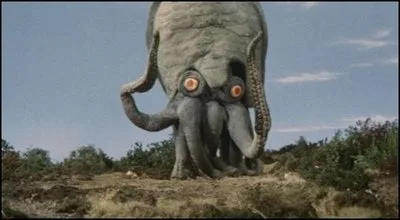
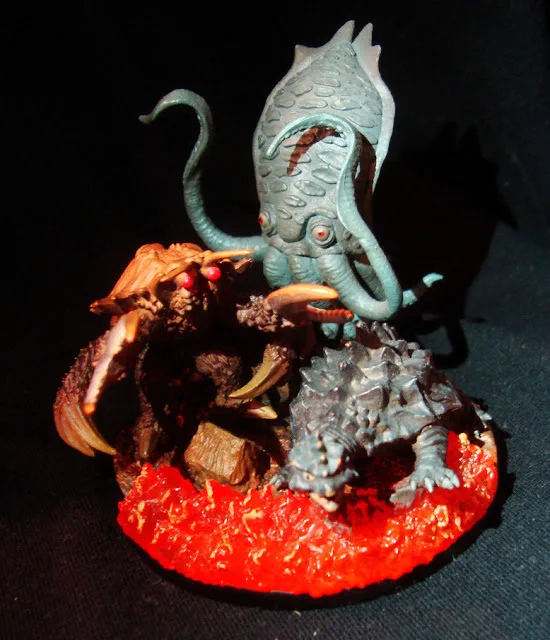
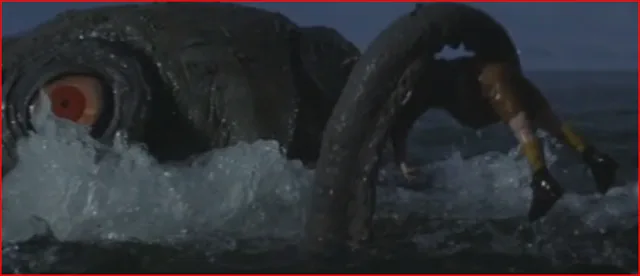
Gezora (ゲゾラ) Mutated from an alien rogue virus, Gezora quickly established a reign of terror to a small island. The grotesque squid rose from the sea but few times, and murdered several people. Leaving only one to live, but forever scarred with horrible frost burns. It wasn't until its final show of power, was the end of the monster carried out. The natives, along with some members of a Japanese expedition, lured the creature into an open field, doused with gasoline. Then, they cast a torch, turning the ground and animal into a blazing inferno. Gezora's screams were more child than adult, as it fled back into the sea. Unfortunately for it, it was far too late, and the animal was mortally wounded. The ocean took back its flesh and blood, swallowing the dead monster with its watery embrace, but the Amoeba retreated. Casting off its deceased host, in order to find another.
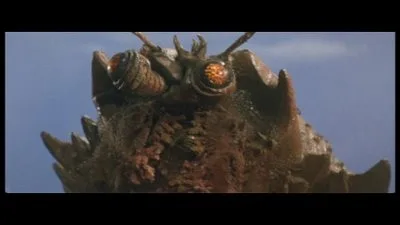
Ganimes (ガニメ) Controlled and powered by the malevolent intelligence of the Amoeba being, a gigantic stone crab, Ganimes, attacked the island. Trying to finish the job that the now dead Gezora left undone, the monstrous animal wadded further inland, before it was met with machine gun fire. However, this does little to detour the creature. Yet the humans once again managed to outsmart the bulbous monster by luring it into a pit, laced with hundreds of sticks of dynamite. The resulting explosion tore his body apart, leaving smoldering bits of flesh. However, the spiritual Amoeba was still alive, and crawled from the open carcass only to assimilate another stone crab.
This duplicate Ganimes was sent to aid another infected animal, this time a jungle turtle named Kamoebas, to eliminate the human threat. Though the partnership was soon dissolved, when a horde of bats besieged the twin giants. The supersonic waves created from their cackling cries broke the hold that the Amoeba possessed, and drove the monsters to fight. Ganimes attacks relentlessly with its pinching claws, and spiting foams of blinding, coalesced seawater, but Kamoebas was able to hold its ground. So caught up were the monsters in their war, that they didn't notice the volcano that they fought on. So, they both proceeded to the lip of the mountain, and toppled inside. Killing themselves and the Amoeba beings that laid within.
This duplicate Ganimes was sent to aid another infected animal, this time a jungle turtle named Kamoebas, to eliminate the human threat. Though the partnership was soon dissolved, when a horde of bats besieged the twin giants. The supersonic waves created from their cackling cries broke the hold that the Amoeba possessed, and drove the monsters to fight. Ganimes attacks relentlessly with its pinching claws, and spiting foams of blinding, coalesced seawater, but Kamoebas was able to hold its ground. So caught up were the monsters in their war, that they didn't notice the volcano that they fought on. So, they both proceeded to the lip of the mountain, and toppled inside. Killing themselves and the Amoeba beings that laid within.
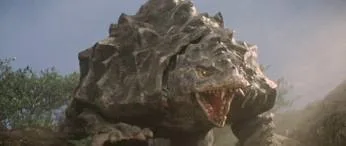
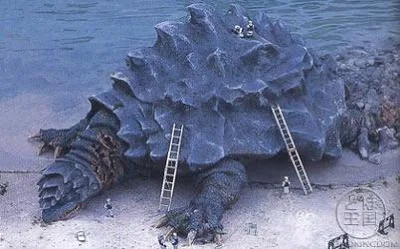
Kamoebas (カメーバ) is a rock turtle monster that first appeared in Toho's 1970 film "Space Amoeba", and reappeared as a dead body in "Godzilla: Tokyo S.O.S." in 2003.
Showa
After Ganimes was destroyed, Yog turned to a rock turtle and made Kamoebas. It also made another Ganimes. But bats fled from a nearby cave and made Yog lose control of the monsters. They battled each other up the mountain in the center of the island and both fell into the volcano, destroying themselves and Yog forever.
Millennium
The gigantic chelonian Kamoebas, long after his first appearance in the 1970 film Space Amoeba, made a brief appearance in the film Godzilla: Tokyo S.O.S., to the surprise of many fans.
In the film, news agencies and the JSDF swarmed to a small part of the coast of Japan. A dead Megalo matamata, or Kamoebas, had washed ashore in the night. As it was investigated they noticed large rips in its neck. It had been killed by none other than Godzilla.
Showa
After Ganimes was destroyed, Yog turned to a rock turtle and made Kamoebas. It also made another Ganimes. But bats fled from a nearby cave and made Yog lose control of the monsters. They battled each other up the mountain in the center of the island and both fell into the volcano, destroying themselves and Yog forever.
Millennium
The gigantic chelonian Kamoebas, long after his first appearance in the 1970 film Space Amoeba, made a brief appearance in the film Godzilla: Tokyo S.O.S., to the surprise of many fans.
In the film, news agencies and the JSDF swarmed to a small part of the coast of Japan. A dead Megalo matamata, or Kamoebas, had washed ashore in the night. As it was investigated they noticed large rips in its neck. It had been killed by none other than Godzilla.
Film appearances
Gezora
Space Amoeba (A.K.A. Yog: Monster From Space) (1970)
Godzilla X Mechagodzilla (2002) - a short cameo via stock footage from Space Amoeba.
Godzilla Final Wars (2004)- brief appearance during the opening credits.
Ganimes
Space Amoeba (A.K.A. Yog: Monster From Space) (1970)
Kamoebas
Space Amoeba (A.K.A. Yog: Monster From Space) (1970)
Godzilla: Tokyo S.O.S (2003)
Gezora
Space Amoeba (A.K.A. Yog: Monster From Space) (1970)
Godzilla X Mechagodzilla (2002) - a short cameo via stock footage from Space Amoeba.
Godzilla Final Wars (2004)- brief appearance during the opening credits.
Ganimes
Space Amoeba (A.K.A. Yog: Monster From Space) (1970)
Kamoebas
Space Amoeba (A.K.A. Yog: Monster From Space) (1970)
Godzilla: Tokyo S.O.S (2003)
- Published on
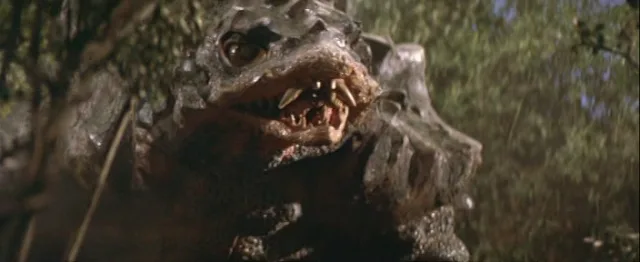
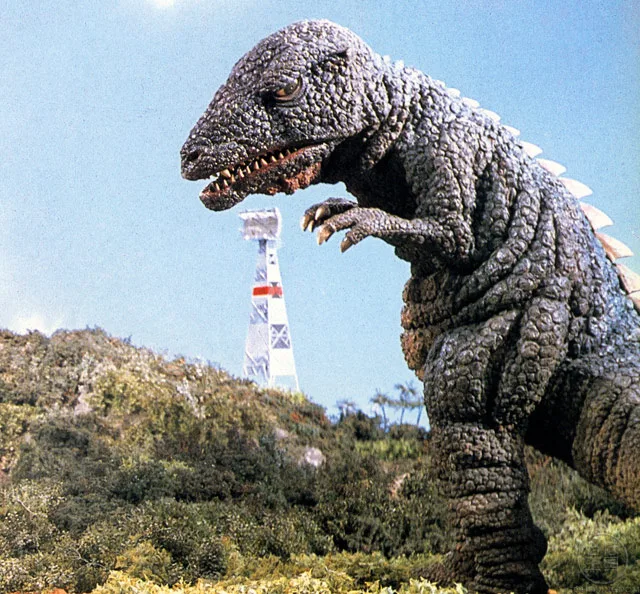
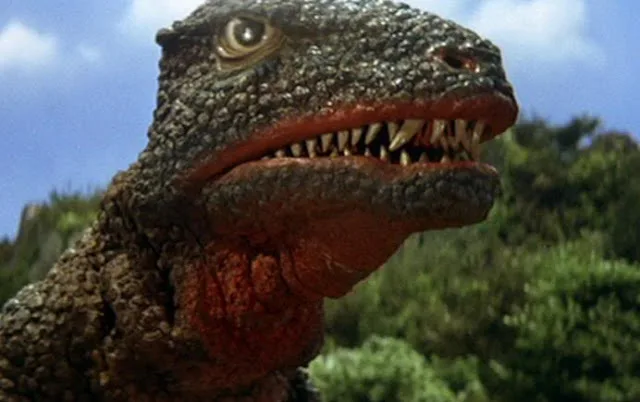
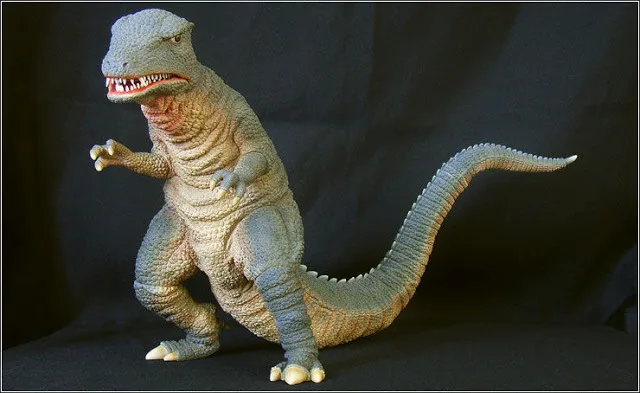
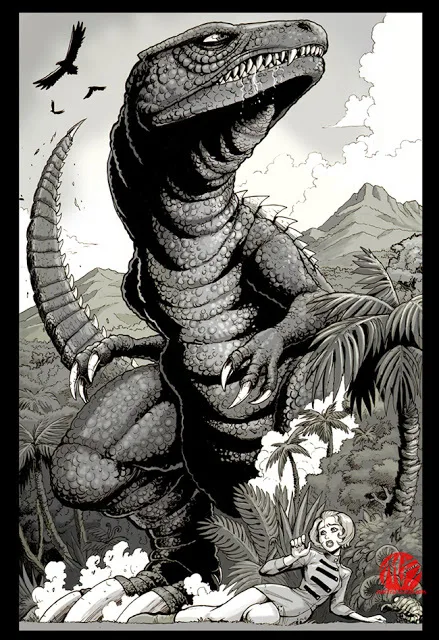
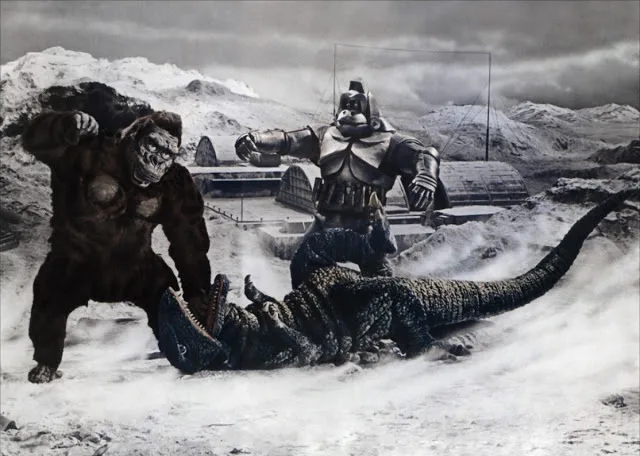
Gorosaurus (ゴロザウルス Gorozaurusu) is a fictional theropod dinosaur created by Toho Studios. He stands 35 meters (105 feet) tall and weighs 8,000 tons in his first appearance. He was an opponent of King Kong in 1967's King Kong Escapes. He later enjoyed a prominent role in 1968's Destroy All Monsters, in which his size was increased to match Godzilla's 50 meter stature. Gorosaurus is a typical giant dinosaur, having no special powers like beams or energy weapons, relying on his strength and athleticism to fight. Gorosaurus' most identifiable fighting move is a flying kick similar to that of a kangaroo.
Character biography
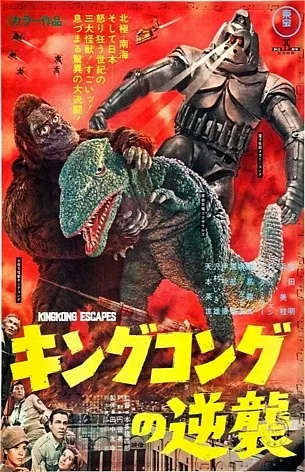
In King Kong Escapes, Gorosaurus is an inhabitant of Mondo Island, the film's primary setting. He attacks and attempts to devour the leading female character, Susan Watson. King Kong arrives to save her and fights Gorosaurus. Kong eventually breaks the dinosaur's jaws, defeating Gorosaurus. In All Monsters Attack, Gorosaurus appears in the dreams of a young boy. In Godzilla vs. Gigan, Gorosaurus is seen living on Monster Island.
In Destroy All Monsters, Gorosaurus appears on a new island, Monster Island. It is an artificially created environment for the monsters of Earth. He lives with other monsters including Godzilla, Mothra, Rodan, Anguirus, Kumonga, Manda, Minilla, Baragon and Varan. A race of aliens called the Kilaaks invades Earth, capturing and establishing mind-control over the monsters. They then release them in cities throughout the world, with Gorosaurus being released in Paris, France. (In both the original and the English dubbed version, Gorosaurus is misidentified as Baragon in the Paris attack. Gorosaurus had to substitute for the digging monster Baragon because the Baragon suit was reworked several times for monsters in the Ultraman series and not usable beyond the glimpse at the end of the film. The scene was scripted with Baragon, and the dialogue was never rerecorded.) However, the humans retaliate and find a way to break the mind control.
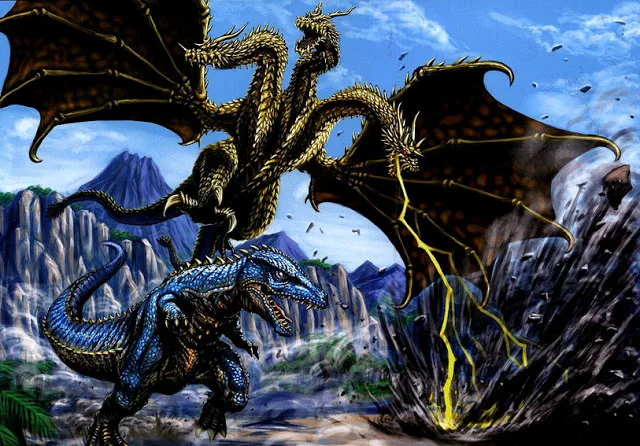
The Kilaaks then unleash the space dragon King Ghidorah to kill the Earth monsters. Gorosaurus plays a pivotal role in the battle, as he twice brings down Ghidorah (the only monster who is able to), the first by pulling on his necks until it falls, heralding the turn of the tide of battle to the Earth monsters's side, and second when he used his kangaroo kick to slam Ghidorah to the ground as Godzilla and Anguirus attack two of the heads, leaving Ghidorah helpless and vulnerable. After killing Ghidorah, Gorosaurus and the other Earth monsters return to Monster Island to live in peace.
In King Kong Escapes, Gorosaurus is an inhabitant of Mondo Island, the film's primary setting. He attacks and attempts to devour the leading female character, Susan Watson. King Kong arrives to save her and fights Gorosaurus. Kong eventually breaks the dinosaur's jaws, defeating Gorosaurus. In All Monsters Attack, Gorosaurus appears in the dreams of a young boy. In Godzilla vs. Gigan, Gorosaurus is seen living on Monster Island.
In Destroy All Monsters, Gorosaurus appears on a new island, Monster Island. It is an artificially created environment for the monsters of Earth. He lives with other monsters including Godzilla, Mothra, Rodan, Anguirus, Kumonga, Manda, Minilla, Baragon and Varan. A race of aliens called the Kilaaks invades Earth, capturing and establishing mind-control over the monsters. They then release them in cities throughout the world, with Gorosaurus being released in Paris, France. (In both the original and the English dubbed version, Gorosaurus is misidentified as Baragon in the Paris attack. Gorosaurus had to substitute for the digging monster Baragon because the Baragon suit was reworked several times for monsters in the Ultraman series and not usable beyond the glimpse at the end of the film. The scene was scripted with Baragon, and the dialogue was never rerecorded.) However, the humans retaliate and find a way to break the mind control.
The Kilaaks then unleash the space dragon King Ghidorah to kill the Earth monsters. Gorosaurus plays a pivotal role in the battle, as he twice brings down Ghidorah (the only monster who is able to), the first by pulling on his necks until it falls, heralding the turn of the tide of battle to the Earth monsters's side, and second when he used his kangaroo kick to slam Ghidorah to the ground as Godzilla and Anguirus attack two of the heads, leaving Ghidorah helpless and vulnerable. After killing Ghidorah, Gorosaurus and the other Earth monsters return to Monster Island to live in peace.
Powers/Abilities
Aside from the usual tooth and claw, Gorosaurus has been noted for using a "kangaroo kick" against foes like King Kong and King Ghidorah. This is Gorosaurus' most popular trait. Also, in the 1968 film Destroy All Monsters, Gorosaurus is shown with the ability to burrow underground. This is the only incident where this ability is shown.
Aside from the usual tooth and claw, Gorosaurus has been noted for using a "kangaroo kick" against foes like King Kong and King Ghidorah. This is Gorosaurus' most popular trait. Also, in the 1968 film Destroy All Monsters, Gorosaurus is shown with the ability to burrow underground. This is the only incident where this ability is shown.
Trivia
Gorosaurus was strangely shown to be burrowing in Paris in Destroy All Monsters. This role was originally intended for Baragon, however the Baragon suit was on loan to Tsuburaya Productions for use on a television series. Toho instead replaced him with Gorosaurus, having Gorosaurus "borrow" Baragon's burrowing ability. Gorosaurus was even refered to as Baragon.
Gorosaurus' name and appearance is similar to the name of a real dinosaur, Gorgosaurus.
Gorosaurus is one of the three monsters that have "saurus" in their names. The other two are Titanosaurus and Godzillasaurus.
Out of all Toho Monsters, Gorosaurus' roar was originally used by Rodan in one scene of Rodan (1956 film).
Gorosaurus' name is derived from the Japanese word Goro (fifth or approximate) and Greek word Sauros (lizard or reptile), so the name Gorosaurus means "approximate lizard".
Gorosaurus was strangely shown to be burrowing in Paris in Destroy All Monsters. This role was originally intended for Baragon, however the Baragon suit was on loan to Tsuburaya Productions for use on a television series. Toho instead replaced him with Gorosaurus, having Gorosaurus "borrow" Baragon's burrowing ability. Gorosaurus was even refered to as Baragon.
Gorosaurus' name and appearance is similar to the name of a real dinosaur, Gorgosaurus.
Gorosaurus is one of the three monsters that have "saurus" in their names. The other two are Titanosaurus and Godzillasaurus.
Out of all Toho Monsters, Gorosaurus' roar was originally used by Rodan in one scene of Rodan (1956 film).
Gorosaurus' name is derived from the Japanese word Goro (fifth or approximate) and Greek word Sauros (lizard or reptile), so the name Gorosaurus means "approximate lizard".
Film appearances
King Kong Escapes (1967)
Destroy All Monsters (1968)
All Monsters Attack (1969, Stock footage)
Godzilla vs. Gigan (1972, Stock Footage)
King Kong Escapes (1967)
Destroy All Monsters (1968)
All Monsters Attack (1969, Stock footage)
Godzilla vs. Gigan (1972, Stock Footage)
- Published on
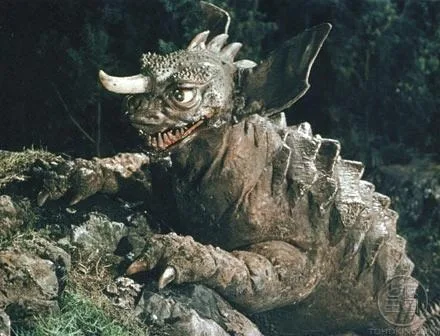
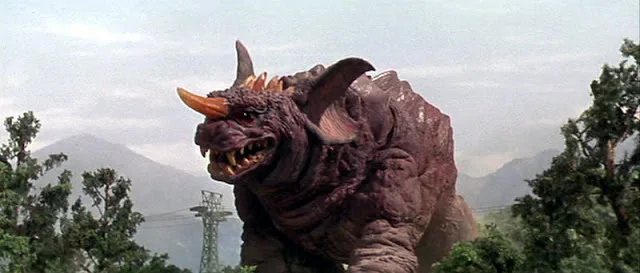
Baragon (バラゴン) is a fictional Kaiju (Japanese giant monster) that was first featured in the 1965 Toho-produced film, Frankenstein Conquers the World. Baragon is a four-legged dinosaur with a horn on his head and large ears. His main weapon is a heat ray that he can fire from his mouth. In addition, he can jump very high and burrow through the ground.
Origin
Showa series
(1965) Frankenstein Conquers the World: Baragon was a dinosaur who burrowed underground to escape the extinction of the other dinosaurs and other prehistoric creatures died out. He adapted to and lived successfully. But when the sounds of a nearby factory disturbed and awakened Baragon, he emerged from the underground and attacked it. He appeared later at Shirane and destroyed the village. Then he emerged at a farm, where he ate the livestock - with feathers flying out of his mouth. During these attacks, Baragon was not seen, so the mutant human Frankenstein was blamed. But there was a person who survived the destruction of the factory who claimed there was a second monster that had attacked the factory. When a small group of scientists searched for Frankenstein, an explosive awoke Baragon from his sleep. He emerged to attack the scientists, but Frankenstein appeared to protect them from Baragon. The two fought a climactic battle, but Frankenstein ultimately defeated Baragon by choking him and breaking his neck. But in the end, a fissure appeared beneath the two and swallowed them up into the Earth
(1968) Destroy All Monsters: Baragon is seen as one of several monsters kept in captivity on Monster Island. Along with the rest of Earth's monsters, he is brought under the control of an alien race called the Kilaaks during their invasion of Earth and forced to destroy cities in their cause. It is unknown if this was the same Baragon that battled Frankenstein or another. The latter theory is supported by the fact this Baragon was smaller than the original. The 1965 version of Baragon stands 25 meters (82 feet) in height, the 1968 version stands up to 57 meters (or 190 ft) in height. He later breaks free from this mind control, and watches (but does not actually take part in) the fight against the Kilaaks and their remaining monster, King Ghidorah before returning to Monster Island with the other Earth monsters.
Showa series
(1965) Frankenstein Conquers the World: Baragon was a dinosaur who burrowed underground to escape the extinction of the other dinosaurs and other prehistoric creatures died out. He adapted to and lived successfully. But when the sounds of a nearby factory disturbed and awakened Baragon, he emerged from the underground and attacked it. He appeared later at Shirane and destroyed the village. Then he emerged at a farm, where he ate the livestock - with feathers flying out of his mouth. During these attacks, Baragon was not seen, so the mutant human Frankenstein was blamed. But there was a person who survived the destruction of the factory who claimed there was a second monster that had attacked the factory. When a small group of scientists searched for Frankenstein, an explosive awoke Baragon from his sleep. He emerged to attack the scientists, but Frankenstein appeared to protect them from Baragon. The two fought a climactic battle, but Frankenstein ultimately defeated Baragon by choking him and breaking his neck. But in the end, a fissure appeared beneath the two and swallowed them up into the Earth
(1968) Destroy All Monsters: Baragon is seen as one of several monsters kept in captivity on Monster Island. Along with the rest of Earth's monsters, he is brought under the control of an alien race called the Kilaaks during their invasion of Earth and forced to destroy cities in their cause. It is unknown if this was the same Baragon that battled Frankenstein or another. The latter theory is supported by the fact this Baragon was smaller than the original. The 1965 version of Baragon stands 25 meters (82 feet) in height, the 1968 version stands up to 57 meters (or 190 ft) in height. He later breaks free from this mind control, and watches (but does not actually take part in) the fight against the Kilaaks and their remaining monster, King Ghidorah before returning to Monster Island with the other Earth monsters.
Use of suit
Of all the monsters in the Toho fame, the Baragon suit was borrowed and used the most by Tsuburaya Productions, the company made famous for its work on the TV show Ultraman. The Baragon suit was reused several times to create the monsters in the series: Neronga, Gabora, and Magular, as well as Pagos from Ultra Q. Notably, Haruo Nakajima (the Godzilla suit actor as well as suit actor for Baragon in his initial debut) also played the suit actor for these monsters (with the exception of Magular.)
In Destroy All Monsters, Baragon was supposed to attack Paris for the film, using his burrowing ability to smash the Arc de Triomphe from below. Unfortunately, the Baragon suit was unavailable due to the fact it was on loan for work on Ultraman. Baragon was replaced with Gorosaurus for this scene, but was still blamed for the attack. Gorosaurus was also given Baragon's special burrowing ability and even his signature roar to further confuse viewers. Baragon was also supposed to be used as a guard for the Kilaak base, but he was not shown on screen while doing this, possibly for the same reason above. Baragon's other appearance was supposed to be Godzilla vs Mechagodzilla. He was supposed to fight Mechagodzilla in the scene after he smashed that building, but instead they replaced him with Anguirus.
Of all the monsters in the Toho fame, the Baragon suit was borrowed and used the most by Tsuburaya Productions, the company made famous for its work on the TV show Ultraman. The Baragon suit was reused several times to create the monsters in the series: Neronga, Gabora, and Magular, as well as Pagos from Ultra Q. Notably, Haruo Nakajima (the Godzilla suit actor as well as suit actor for Baragon in his initial debut) also played the suit actor for these monsters (with the exception of Magular.)
In Destroy All Monsters, Baragon was supposed to attack Paris for the film, using his burrowing ability to smash the Arc de Triomphe from below. Unfortunately, the Baragon suit was unavailable due to the fact it was on loan for work on Ultraman. Baragon was replaced with Gorosaurus for this scene, but was still blamed for the attack. Gorosaurus was also given Baragon's special burrowing ability and even his signature roar to further confuse viewers. Baragon was also supposed to be used as a guard for the Kilaak base, but he was not shown on screen while doing this, possibly for the same reason above. Baragon's other appearance was supposed to be Godzilla vs Mechagodzilla. He was supposed to fight Mechagodzilla in the scene after he smashed that building, but instead they replaced him with Anguirus.
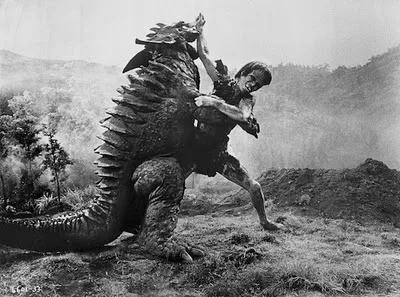
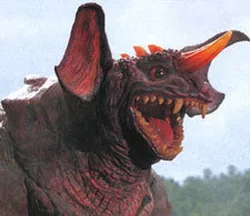
Millennium series
In the Millennium series, Baragon reappeared in the 2001 film, Godzilla, Mothra and King Ghidorah: Giant Monsters All-Out Attack as one of three ancient guardian monsters. The other two are Mothra and King Ghidorah (originally Varan and Anguirus). When Godzilla is revived by the souls of the people who died in World War II, Baragon, Mothra, and King Ghidorah were summoned to protect the nation from the threat. Baragon was the first of the three guardians to confront Godzilla and was eventually killed by the monster's atomic breath. Baragon does not have a heat ray or a glowing horn, but he still has his burrowing and extraordinary jumping abilities.
In Godzilla Final Wars, Stock footage of Baragon from Frankenstein Conquers the World was seen during the opening claiming that Baragon was one of many monsters that arose due to the devastation that the World Wars brought, along with Varan, Gezora, Gaira, Titanosaurus, and Megaguirus.
In the Millennium series, Baragon reappeared in the 2001 film, Godzilla, Mothra and King Ghidorah: Giant Monsters All-Out Attack as one of three ancient guardian monsters. The other two are Mothra and King Ghidorah (originally Varan and Anguirus). When Godzilla is revived by the souls of the people who died in World War II, Baragon, Mothra, and King Ghidorah were summoned to protect the nation from the threat. Baragon was the first of the three guardians to confront Godzilla and was eventually killed by the monster's atomic breath. Baragon does not have a heat ray or a glowing horn, but he still has his burrowing and extraordinary jumping abilities.
In Godzilla Final Wars, Stock footage of Baragon from Frankenstein Conquers the World was seen during the opening claiming that Baragon was one of many monsters that arose due to the devastation that the World Wars brought, along with Varan, Gezora, Gaira, Titanosaurus, and Megaguirus.
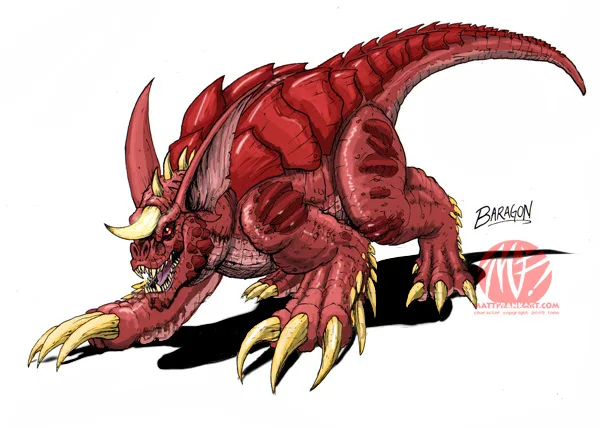
Film Appearances
Frankenstein Conquers the World
Destroy All Monsters
Godzilla, Mothra and King Ghidorah: Giant Monsters All-Out Attack
Godzilla: Final Wars
Frankenstein Conquers the World
Destroy All Monsters
Godzilla, Mothra and King Ghidorah: Giant Monsters All-Out Attack
Godzilla: Final Wars
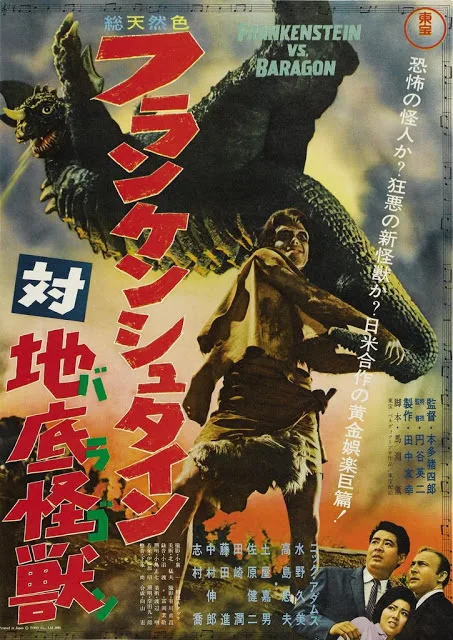
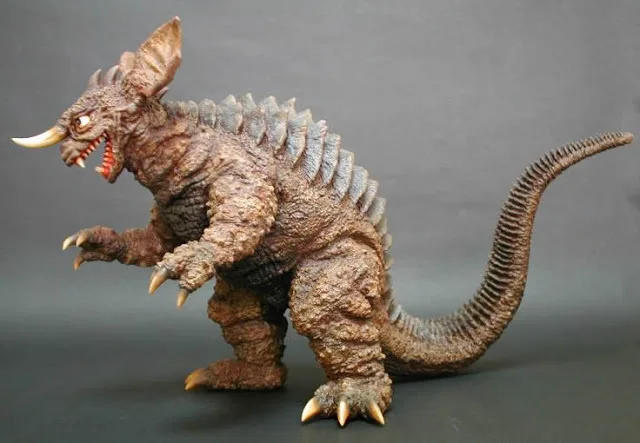
- Published on
Yongary or Yonggary (대괴수 용가리 - Taekoesu Yongary lit. Great Monster Yongary), also known as Yongary, Monster from the Deep, is a 1967 South Korean Kaiju film directed by prominent genre-film director Kim Ki-duk (no relation to the art film director Kim Ki-duk). In 1999, a reimagining of the film was produced, released in Korea simply as Yonggary and released in the United States as Reptilian.
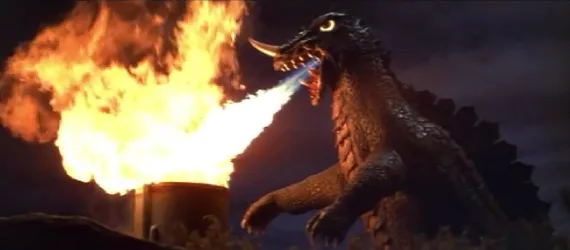
Synopsis
In the Middle East, a bomb is set off that creates massive earthquakes. Meanwhile in South Korea, a young couple is about to get married and the tension builds when South Korea sends a manned space capsule to investigate the bomb site. The earthquake makes its way to South Korea, caused by a giant monster named Yongary (inspired by a mythical creature in Korean lore). Yongary attacks Seoul and makes his way to the oil refineries where he consumes the oil. A child related to the aforementioned couple turns off the refineries' oil basins; Yonggary, enraged, starts attacking until a chemical explosion at the refinery proves to have an effect on it. The Korean Government then uses oil to draw Yonggary to a local river, and kills it with a refined version of the ammonia compound.
In the Middle East, a bomb is set off that creates massive earthquakes. Meanwhile in South Korea, a young couple is about to get married and the tension builds when South Korea sends a manned space capsule to investigate the bomb site. The earthquake makes its way to South Korea, caused by a giant monster named Yongary (inspired by a mythical creature in Korean lore). Yongary attacks Seoul and makes his way to the oil refineries where he consumes the oil. A child related to the aforementioned couple turns off the refineries' oil basins; Yonggary, enraged, starts attacking until a chemical explosion at the refinery proves to have an effect on it. The Korean Government then uses oil to draw Yonggary to a local river, and kills it with a refined version of the ammonia compound.
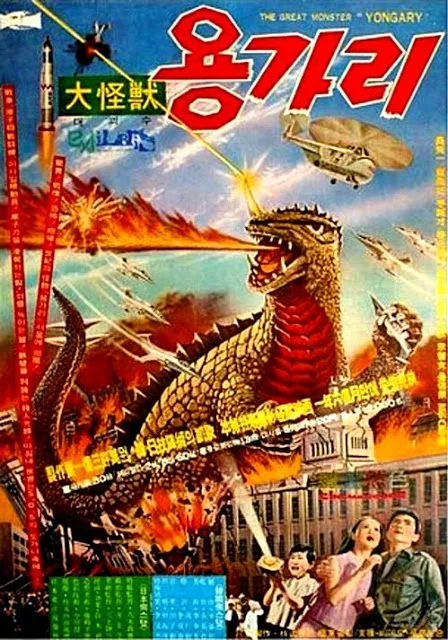
Remake
The film was remade in 1999 by Shim Hyung-rae. To date, the Yonggary remake is the most expensive Korean film ever produced. The film was a moderate success and due to its success, a 2001 Upgrade Edition was produced a few months after its initial release. This version was slightly different from the original 1999 cut. The 2001 Upgrade featured new additional scenes, a new soundtrack by Chris Desmond, and new effects. 60% of the original 1999 cut made it to the 2001 upgrade version. It first premiered at a Japanese film festival in 2000 and then had its worldwide release in January 2001, which flopped due to poor promotion. The original 1999 cut was never released on VHS or DVD and the only version of the film available is the 2001 upgrade edition, which is now known as Reptilian. It's been debated whether prints of the original 1999 cut had been destroyed by the studio when at the time they believed that the 2001 upgrade edition would be a box office success.The 1999 cut was a proper remake of the first film, where Yonggary dies at the end, and the aliens were not in it.
The film was remade in 1999 by Shim Hyung-rae. To date, the Yonggary remake is the most expensive Korean film ever produced. The film was a moderate success and due to its success, a 2001 Upgrade Edition was produced a few months after its initial release. This version was slightly different from the original 1999 cut. The 2001 Upgrade featured new additional scenes, a new soundtrack by Chris Desmond, and new effects. 60% of the original 1999 cut made it to the 2001 upgrade version. It first premiered at a Japanese film festival in 2000 and then had its worldwide release in January 2001, which flopped due to poor promotion. The original 1999 cut was never released on VHS or DVD and the only version of the film available is the 2001 upgrade edition, which is now known as Reptilian. It's been debated whether prints of the original 1999 cut had been destroyed by the studio when at the time they believed that the 2001 upgrade edition would be a box office success.The 1999 cut was a proper remake of the first film, where Yonggary dies at the end, and the aliens were not in it.
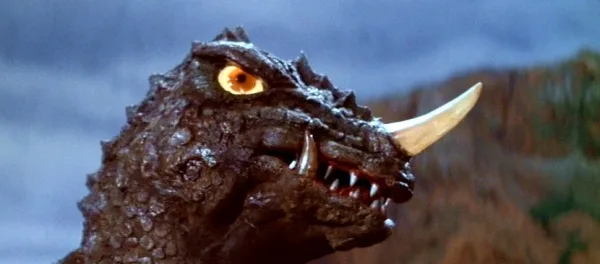
Trivia
In South Korea, Reptilian was very unpopular, and no DVDs were sold. In the USA and Japan, they can be purchased online and at some stores. However, it aired a couple of times on SciFi Channel.
The new design of Yonggary is completely different from the original. He is taller, has three horns on his head, and has a jewel on his forehead called the Damon. The Damon was placed there by the aliens, so that they can control Yonggary and use him to destroy planet Earth. When the Damon was destroyed, they lost all control over Yonggary, and Yonggary turned good and helped mankind defeat the aliens.
The original Yonggary had flamethrower breath and could shoot a laser beam from the horn on his snout, but the new Yonggary shoots fireballs from his mouth and has powers he has yet to discover(according to the aliens at the end of the film).
The original Yonggary bears a striking resemblance to Barugon from the Gamera series, as well as Godzilla, whom of which inspired Hyung Rae to create Yonggary.
In the original film, Yonggary is shown to have a diet of oil. However, in the remake, he is not shown eating (or drinking) anything.
Although the original version of the beast was closer in appearence to Godzilla, the remade version fought another monster, which is featured in most Godzilla films. Another similarity, the original kaiju was meant to terrorize the people of Korea, much like the original Godzilla destroyed Japan. Also, in the US version of the remake he is a savior to mankind, like Godzilla is in countless movies.
The origin of the new Yonggary is unknown; the original was burrowing underground, but the new monster is just a skeleton at the beginning and is resurrected by the aliens.
Yonggary means Huge Dragon in Korean.
One of the possible reasons for Yonggary's redesign in the remake might be people criticized the monster for looking like Godzilla. Another reason might be the remake was inspired by the American Godzilla remake, and Godzilla's design for the movie changed the monster completely. This could be the case, as it has many similarities to the American Godzilla remake, such as a Western cast. Also, the American Godzilla ends with the camera going into the surviving baby's mouth, and Reptilian ends with the camera going into Yonggary's mouth.
There was an alternate ending for Reptilian that was exclusive to the original Korean release; Yonggary never turns good and is eventually killed by mankind, and never fights Cykor.
In South Korea, Reptilian was very unpopular, and no DVDs were sold. In the USA and Japan, they can be purchased online and at some stores. However, it aired a couple of times on SciFi Channel.
The new design of Yonggary is completely different from the original. He is taller, has three horns on his head, and has a jewel on his forehead called the Damon. The Damon was placed there by the aliens, so that they can control Yonggary and use him to destroy planet Earth. When the Damon was destroyed, they lost all control over Yonggary, and Yonggary turned good and helped mankind defeat the aliens.
The original Yonggary had flamethrower breath and could shoot a laser beam from the horn on his snout, but the new Yonggary shoots fireballs from his mouth and has powers he has yet to discover(according to the aliens at the end of the film).
The original Yonggary bears a striking resemblance to Barugon from the Gamera series, as well as Godzilla, whom of which inspired Hyung Rae to create Yonggary.
In the original film, Yonggary is shown to have a diet of oil. However, in the remake, he is not shown eating (or drinking) anything.
Although the original version of the beast was closer in appearence to Godzilla, the remade version fought another monster, which is featured in most Godzilla films. Another similarity, the original kaiju was meant to terrorize the people of Korea, much like the original Godzilla destroyed Japan. Also, in the US version of the remake he is a savior to mankind, like Godzilla is in countless movies.
The origin of the new Yonggary is unknown; the original was burrowing underground, but the new monster is just a skeleton at the beginning and is resurrected by the aliens.
Yonggary means Huge Dragon in Korean.
One of the possible reasons for Yonggary's redesign in the remake might be people criticized the monster for looking like Godzilla. Another reason might be the remake was inspired by the American Godzilla remake, and Godzilla's design for the movie changed the monster completely. This could be the case, as it has many similarities to the American Godzilla remake, such as a Western cast. Also, the American Godzilla ends with the camera going into the surviving baby's mouth, and Reptilian ends with the camera going into Yonggary's mouth.
There was an alternate ending for Reptilian that was exclusive to the original Korean release; Yonggary never turns good and is eventually killed by mankind, and never fights Cykor.
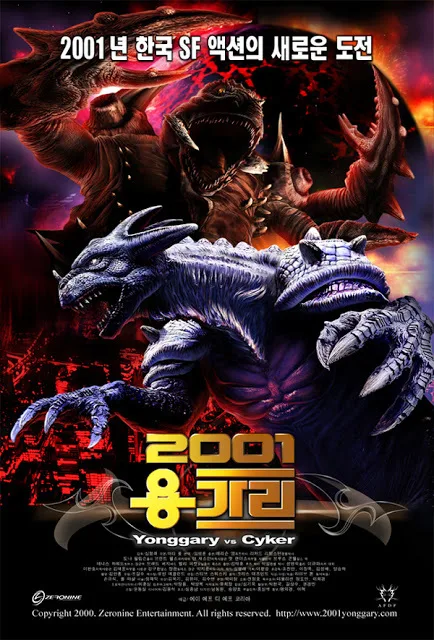
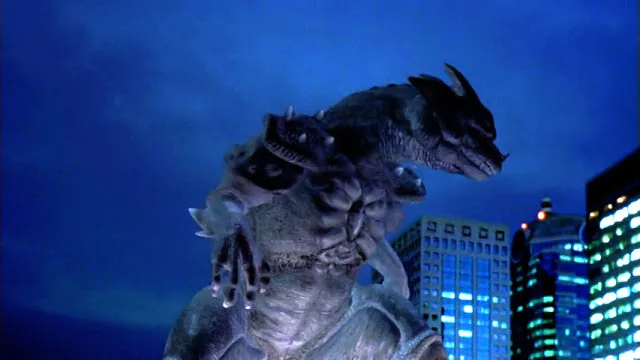
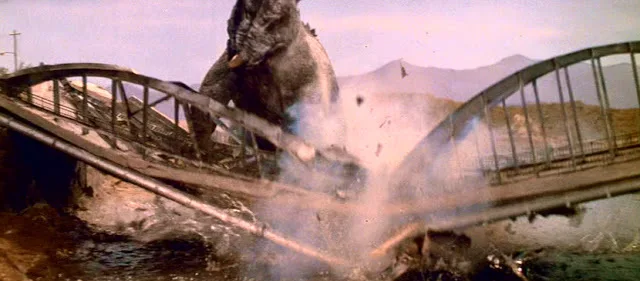
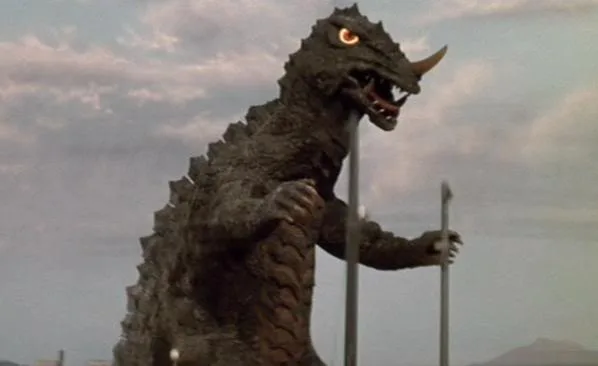
- Published on
Gorgo is a 1961 British Giant monster movie. Directed by Eugène Lourié, it tells the story of an underwater monster's capture off the coast of Ireland. The monster is taken to London to be featured as a circus attraction. The film borrows elements from other monster movies, such as Godzilla and King Kong.
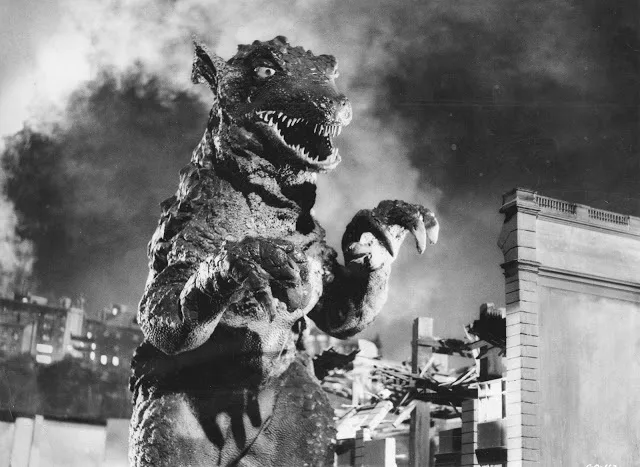
Production
The film was originally set to take place in Japan; this was then changed to France, and then finally changed to the UK. According to Bill Warren's film book Keep Watching the Skies, Australia was also considered for a locale, but the producers supposedly decided that audiences "wouldn't care" if a monster attacked Australia; Australia's alleged lack of worldwide recognizable landmarks for Gorgo to destroy was also cited as a consideration.
The location where Gorgo first appears, the fictional Nara Island, is likely a tribute to the Godzilla series; Nara being a historical period of Japan: alternatively, it may be an anagram for the Aran Islands, off Ireland's west coast. The exterior scenes set in Ireland were filmed at Bulloch Harbour and Coliemore Harbour, both near the County Dublin town of Dalkey. Other scenes were filmed at the MGM-British Studios in Borehamwood in Hertfordshire.
Scenes where Gorgo is driven through the streets of London were shot on a Sunday morning when there was no traffic. The film studio wanted Gorgo to fight the military despite director Eugène Lourié's objections. Later, Lourié would acquire a print of the film and remove the footage.
Gorgo's special effects were achieved by suitmation and miniaturization, a technique pioneered in the Godzilla films. The younger Gorgo was smaller than usual giant monsters so the sets around him were built to a larger scale leading to a greater sense of realism and believability. The creatures were also shot with then-pricey slow-motion cameras to create a sense of scale. The effects were complex and are well respected by special effects artists and fans. The film is also sometimes praised for its innovative ending, which seems to have an environmentalist moral. Unusually for such films, the monsters, which are presented as innocent victims of human interference, survive and prevail.
The film was originally set to take place in Japan; this was then changed to France, and then finally changed to the UK. According to Bill Warren's film book Keep Watching the Skies, Australia was also considered for a locale, but the producers supposedly decided that audiences "wouldn't care" if a monster attacked Australia; Australia's alleged lack of worldwide recognizable landmarks for Gorgo to destroy was also cited as a consideration.
The location where Gorgo first appears, the fictional Nara Island, is likely a tribute to the Godzilla series; Nara being a historical period of Japan: alternatively, it may be an anagram for the Aran Islands, off Ireland's west coast. The exterior scenes set in Ireland were filmed at Bulloch Harbour and Coliemore Harbour, both near the County Dublin town of Dalkey. Other scenes were filmed at the MGM-British Studios in Borehamwood in Hertfordshire.
Scenes where Gorgo is driven through the streets of London were shot on a Sunday morning when there was no traffic. The film studio wanted Gorgo to fight the military despite director Eugène Lourié's objections. Later, Lourié would acquire a print of the film and remove the footage.
Gorgo's special effects were achieved by suitmation and miniaturization, a technique pioneered in the Godzilla films. The younger Gorgo was smaller than usual giant monsters so the sets around him were built to a larger scale leading to a greater sense of realism and believability. The creatures were also shot with then-pricey slow-motion cameras to create a sense of scale. The effects were complex and are well respected by special effects artists and fans. The film is also sometimes praised for its innovative ending, which seems to have an environmentalist moral. Unusually for such films, the monsters, which are presented as innocent victims of human interference, survive and prevail.
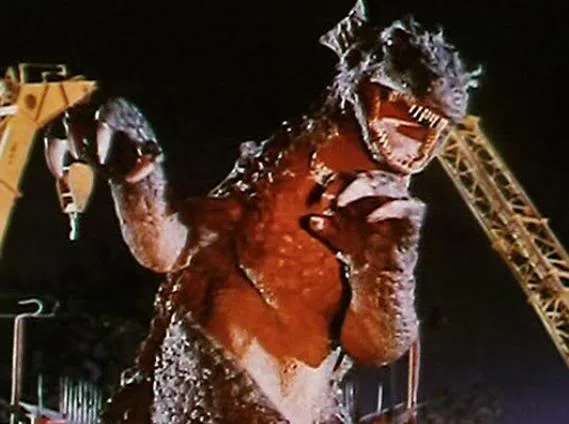
Novel and comic
A novelization of the film was released in paperback at the time of its original release (Gorgo by Carson Bingham (Monarch, 1960)).
From 1961 to 1965 Charlton Comics published 23 issues of the comic Gorgo. It included work by Spider-Man co-creator Steve Ditko. The series was renamed Fantastic Giants with issue #24 which turned out to be the last issue of the series.
Gorgo also appeared in a three issue mini-series that started off as Gorgo's Revenge, before it was renamed The Return of Gorgo with issue #2. The series ran from 1962-1964.
Some of these issues were reprinted (in black and white) in a trade paperback in 2011 called Angry Apes n' Leapin Lizards.
A novelization of the film was released in paperback at the time of its original release (Gorgo by Carson Bingham (Monarch, 1960)).
From 1961 to 1965 Charlton Comics published 23 issues of the comic Gorgo. It included work by Spider-Man co-creator Steve Ditko. The series was renamed Fantastic Giants with issue #24 which turned out to be the last issue of the series.
Gorgo also appeared in a three issue mini-series that started off as Gorgo's Revenge, before it was renamed The Return of Gorgo with issue #2. The series ran from 1962-1964.
Some of these issues were reprinted (in black and white) in a trade paperback in 2011 called Angry Apes n' Leapin Lizards.
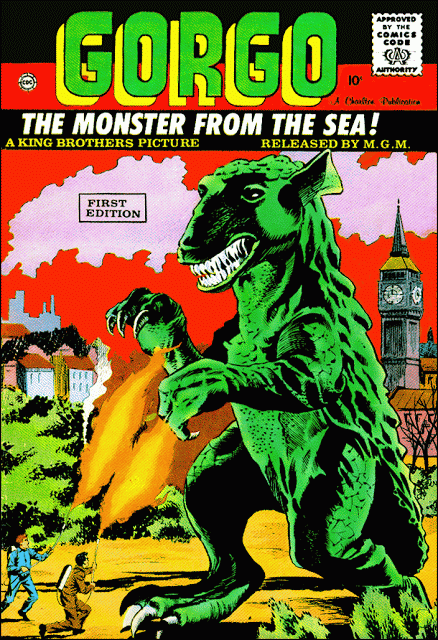
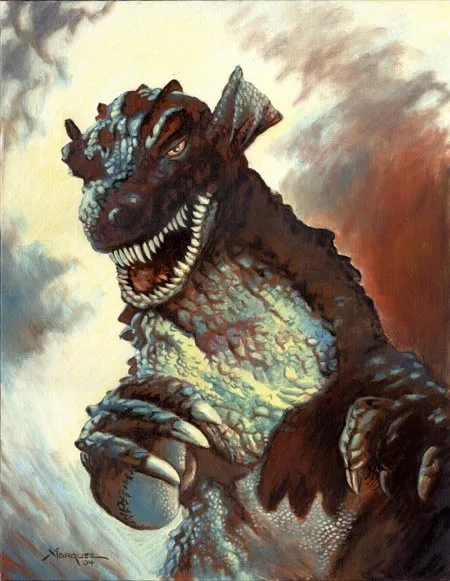
- Published on
Gigan (ガイガン Gaigan) is a kaiju (Japanese giant monster) from the Godzilla series, introduced in the 1972 film Godzilla vs. Gigan. Gigan is an organic/cybernetic monster sporting a buzzsaw weapon in its frontal abdominal region and large metallic hooks for hands. Gigan is considered Godzilla's most brutal and violent opponent, alongside Destroyah, both of which were easily able to severely injure Godzilla. Gigan was also the first monster in the Toho sci-fi series to cause Godzilla to visibly bleed.
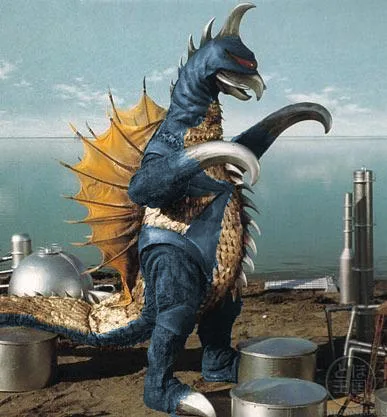
Appearances
Gigan's first appearance was in the 1972 film Godzilla vs. Gigan. In the film, Gigan is summoned to Earth by the antagonist Nebula M Space Hunter aliens where he was paired with the three-headed space dragon King Ghidorah to destroy Tokyo. They were challenged by Godzilla and Anguirus, and after a long fight the two space monsters were driven away.
In the 1973 film, Godzilla vs. Megalon, Gigan was sent by the antagonist Nebulans to assist the people of Seatopia in their assault on humanity by aiding their god, Megalon, in a battle against Godzilla and the robot Jet Jaguar. After receiving a broken arm at the hands of Jet Jaguar, Gigan fled to space, leaving his erstwhile ally Megalon to face Godzilla and Jet Jaguar alone. This is the second time Gigan has abandoned an ally. This seems to indicate that Gigan has a traitorous or cowardly personality.
Also in 1973, Gigan made an appearance on Toho's television series Zone Fighter. After his battle with Godzilla and Jet Jaguar, Gigan was captured in space by the Garoga army and sent back to earth to prevent Godzilla from rescuing Zone Fighter, but he is soundly defeated by him. Left for dead, Godzilla leaves believing he is victorious, but Gigan revives shortly afterwards and battles Zone Fighter himself. In the final battle, Gigan is seemingly killed by Zone Fighter. It was made official by Toho that this indeed happened in the Showa Godzilla universe.
Gigan's latest appearance was in the 2004 Millennium film, Godzilla: Final Wars, where he is one of the main antagonists for Godzilla to fight. Long ago, Gigan once fought Mothra for the fate of the Earth and ultimately was defeated by Mothra. Years later his sarcophagus is discovered and analyzed by the human, but is suddenly revealed to be a weapon used by the Xiliens too. Gigan awakens and causes havoc and destruction in Japan, but is then sent to destroy the Gotengo in hopes of not awakening Godzilla. Although Gigan does manage to bring down the Gotengo (temporarily,) Gigan then faces off against Godzilla and is seemingly killed when Godzilla blows his head off with his Atomic Ray. During the climactic battle between Godzilla and Monster X, Mothra arrives to assist Godzilla but is intercepted by a revived Gigan, whose arms have been retrofitted with enormous chainsaws in place of his iconic blades. Mothra and Gigan resume their ancient rivalry and after a long battle that briefly interrupts Godzilla and Monster X's battle, Gigan is killed by a kamikaze attack from the flaming, grievously wounded Mothra.
Gigan's first appearance was in the 1972 film Godzilla vs. Gigan. In the film, Gigan is summoned to Earth by the antagonist Nebula M Space Hunter aliens where he was paired with the three-headed space dragon King Ghidorah to destroy Tokyo. They were challenged by Godzilla and Anguirus, and after a long fight the two space monsters were driven away.
In the 1973 film, Godzilla vs. Megalon, Gigan was sent by the antagonist Nebulans to assist the people of Seatopia in their assault on humanity by aiding their god, Megalon, in a battle against Godzilla and the robot Jet Jaguar. After receiving a broken arm at the hands of Jet Jaguar, Gigan fled to space, leaving his erstwhile ally Megalon to face Godzilla and Jet Jaguar alone. This is the second time Gigan has abandoned an ally. This seems to indicate that Gigan has a traitorous or cowardly personality.
Also in 1973, Gigan made an appearance on Toho's television series Zone Fighter. After his battle with Godzilla and Jet Jaguar, Gigan was captured in space by the Garoga army and sent back to earth to prevent Godzilla from rescuing Zone Fighter, but he is soundly defeated by him. Left for dead, Godzilla leaves believing he is victorious, but Gigan revives shortly afterwards and battles Zone Fighter himself. In the final battle, Gigan is seemingly killed by Zone Fighter. It was made official by Toho that this indeed happened in the Showa Godzilla universe.
Gigan's latest appearance was in the 2004 Millennium film, Godzilla: Final Wars, where he is one of the main antagonists for Godzilla to fight. Long ago, Gigan once fought Mothra for the fate of the Earth and ultimately was defeated by Mothra. Years later his sarcophagus is discovered and analyzed by the human, but is suddenly revealed to be a weapon used by the Xiliens too. Gigan awakens and causes havoc and destruction in Japan, but is then sent to destroy the Gotengo in hopes of not awakening Godzilla. Although Gigan does manage to bring down the Gotengo (temporarily,) Gigan then faces off against Godzilla and is seemingly killed when Godzilla blows his head off with his Atomic Ray. During the climactic battle between Godzilla and Monster X, Mothra arrives to assist Godzilla but is intercepted by a revived Gigan, whose arms have been retrofitted with enormous chainsaws in place of his iconic blades. Mothra and Gigan resume their ancient rivalry and after a long battle that briefly interrupts Godzilla and Monster X's battle, Gigan is killed by a kamikaze attack from the flaming, grievously wounded Mothra.
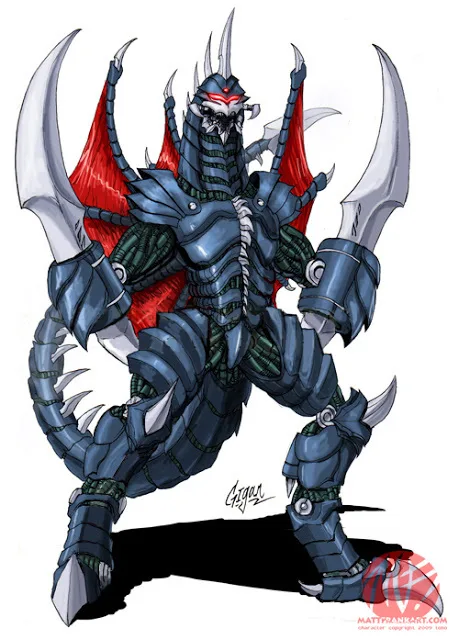
Powers and Abilities
Hooked arms: Gigan possesses razor-sharp hooked blades in place of hands which the monster uses to both batter and stab his opponents. In his appearance on the television series Zone Fighter, the tips of the hooks can release an explosive charge on contact with an enemy. In Godzilla: Final Wars, Gigan's arms were replaced with chainsaws after being defeated by Godzilla.
Antigravity flight: Gigan has a trio of retractable wings which is capable of allowing Gigan to fly at speeds of up to Mach 3. This normally assists in interstellar travel and is utilized very little, if at all, during battle situations. When it is used in battle, however, Gigan will often use it to engage in aerial slams to continuously topple his opponents without giving them a chance to counter, or even get up. In Godzilla: Final Wars, the antigravity flight was replaced by jetpacks, presumably to give Gigan more of a robotic feel.
Buzzsaw: Gigan has a buzzsaw built into his abdominal area. It is of considerable durability and effectiveness as it was sharp enough to cause severe epidermal damage to Godzilla and Anguirus (being the first weapon shown to breach Godzilla's skin and actually draw blood) and brought down a weakened Gotengo.
Grappling cables: In Godzilla: Final Wars, Gigan was able to fire two hooked grappling cables from beneath both of his hand blades which he used to snag onto his opponents and reel them into range of his deadly buzzsaw.
Razor discs: In Godzilla: Final Wars, the upgraded Gigan was able to fire two razor sharp disks from just above his buzzsaw. Mothra however dodged them and simultaneously released her reflective powder, which caused them to malfunction and boomerang back towards Gigan who was promptly decapitated the second time in that movie.
Eye beam: In Godzilla: Final Wars, Gigan could fire a red beam from his eye that scattered into a shot-gun like blast of energy. This ability, however was never used in the Showa films, possibly due to budgets cuts. In Godzilla vs. Gigan an unexplained blue light sparkles on his forehead only for a split second after a rock hits his forehead.
Hooked arms: Gigan possesses razor-sharp hooked blades in place of hands which the monster uses to both batter and stab his opponents. In his appearance on the television series Zone Fighter, the tips of the hooks can release an explosive charge on contact with an enemy. In Godzilla: Final Wars, Gigan's arms were replaced with chainsaws after being defeated by Godzilla.
Antigravity flight: Gigan has a trio of retractable wings which is capable of allowing Gigan to fly at speeds of up to Mach 3. This normally assists in interstellar travel and is utilized very little, if at all, during battle situations. When it is used in battle, however, Gigan will often use it to engage in aerial slams to continuously topple his opponents without giving them a chance to counter, or even get up. In Godzilla: Final Wars, the antigravity flight was replaced by jetpacks, presumably to give Gigan more of a robotic feel.
Buzzsaw: Gigan has a buzzsaw built into his abdominal area. It is of considerable durability and effectiveness as it was sharp enough to cause severe epidermal damage to Godzilla and Anguirus (being the first weapon shown to breach Godzilla's skin and actually draw blood) and brought down a weakened Gotengo.
Grappling cables: In Godzilla: Final Wars, Gigan was able to fire two hooked grappling cables from beneath both of his hand blades which he used to snag onto his opponents and reel them into range of his deadly buzzsaw.
Razor discs: In Godzilla: Final Wars, the upgraded Gigan was able to fire two razor sharp disks from just above his buzzsaw. Mothra however dodged them and simultaneously released her reflective powder, which caused them to malfunction and boomerang back towards Gigan who was promptly decapitated the second time in that movie.
Eye beam: In Godzilla: Final Wars, Gigan could fire a red beam from his eye that scattered into a shot-gun like blast of energy. This ability, however was never used in the Showa films, possibly due to budgets cuts. In Godzilla vs. Gigan an unexplained blue light sparkles on his forehead only for a split second after a rock hits his forehead.
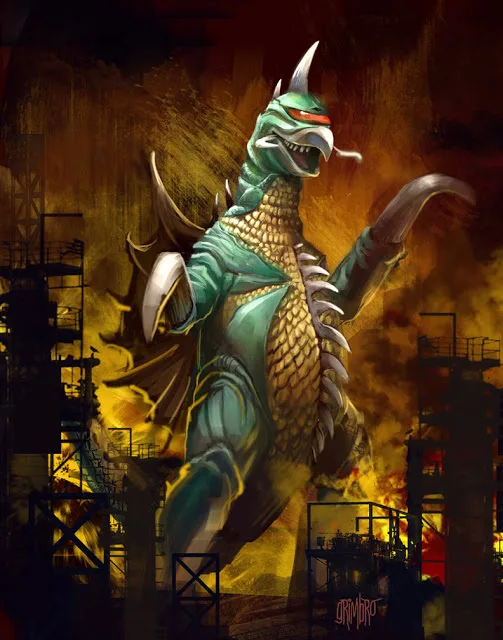
Film Appearances
Godzilla vs. Gigan
Godzilla vs. Megalon
Godzilla: Final Wars
Godzilla vs. Gigan
Godzilla vs. Megalon
Godzilla: Final Wars
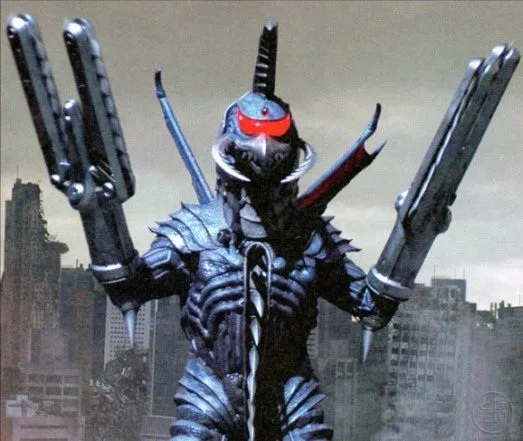
Gigan has also appeared in IDW's Godzilla and Godzilla: Gangsters & Goliaths comic book series.
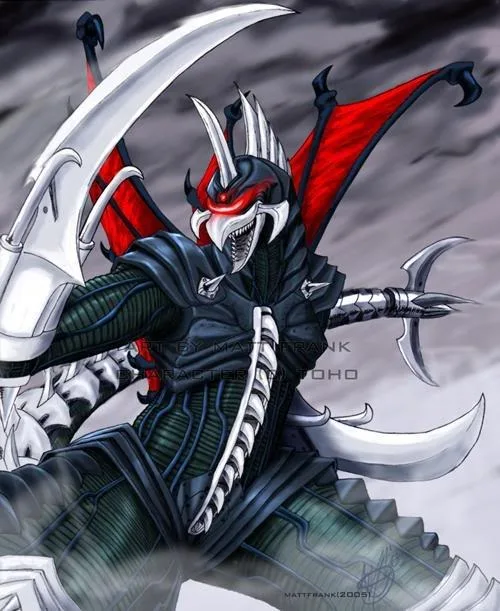
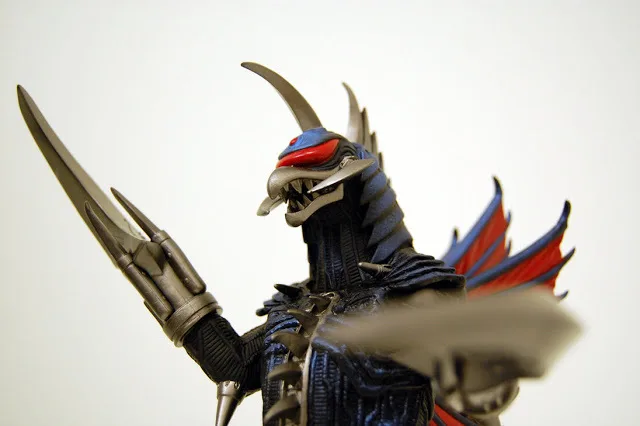
- Published on
Gyaos (ギャオス Gyaosu), is the name of several daikaiju from Daiei's Gamera film series, introduced in their 1967 production Gamera vs. Gyaos and one of Gamera's most famous opponents. It is the only Gamera foe to appear in the Showa, Heisei, and Millennium Gamera films. This makes Gyaos, arguably Gamera's arch nemesis, though Iyris and Queen Legion may also be likely candidates.
Gyaos resembles a giant cross between a pterosaur and a bat, with a flattened, arrow-shaped head, leathery wings with three claws on each, taloned feet, and a fish-like tail. It has dull blue skin in most incarnations. The Gyaos in Gamera: Guardian of the Universe had a more streamlined appearance, with larger wings and a longer neck, as well as red eyes.
Gyaos resembles a giant cross between a pterosaur and a bat, with a flattened, arrow-shaped head, leathery wings with three claws on each, taloned feet, and a fish-like tail. It has dull blue skin in most incarnations. The Gyaos in Gamera: Guardian of the Universe had a more streamlined appearance, with larger wings and a longer neck, as well as red eyes.
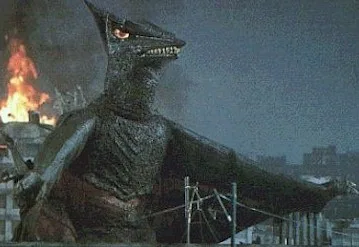
Appearances
Showa Era
In Gamera vs. Gyaos, Gyaos appeared in Japan from a large cavern, and feasted on blood (principally that of livestock and human beings). Soon, Gamera confronted Gyaos, and after a battle, Gyaos was forced to flee and Gamera was forced into the ocean to recover. It is soon learned that light from the sun causes Gyaos' tissue to shrivel, so the light of the city stadium of Nagoya kept Gyaos at bay. Gamera soon returned to finish Gyaos off and, after a battle in the air, Gyaos cut off his own foot to escape from the sun. The protagonists developed a plan to place artificial blood on a rooftop in Nagoya. The plan was to keep Gyaos drinking the blood for so long that the sun would come up and kill him. But Gyaos proved more cunning than originally thought and used a strange fog attack to protect himself from the sun. The next plan was to lure Gamera to Gyaos' lair in the forest by setting the forest on fire. Gyaos used his fog attack to put out the flames, but Gamera arrived and eventually defeated Gyaos by throwing the beast into a volcano.
Space Gyaos appeared briefly in Gamera vs. Guiron, and quickly finds itself victim of Gamera's titular opponent. In reality, Space Gyaos is simply the Gyaos prop from Gamera vs. Gyaos painted silver. This was done because production crew of the film did not have the time and budget to invest the time of creating another new monster.
Stock footage of Gyaos was later featured in the Shōwa series recap Gamera: Super Monster among others.
Showa Era
In Gamera vs. Gyaos, Gyaos appeared in Japan from a large cavern, and feasted on blood (principally that of livestock and human beings). Soon, Gamera confronted Gyaos, and after a battle, Gyaos was forced to flee and Gamera was forced into the ocean to recover. It is soon learned that light from the sun causes Gyaos' tissue to shrivel, so the light of the city stadium of Nagoya kept Gyaos at bay. Gamera soon returned to finish Gyaos off and, after a battle in the air, Gyaos cut off his own foot to escape from the sun. The protagonists developed a plan to place artificial blood on a rooftop in Nagoya. The plan was to keep Gyaos drinking the blood for so long that the sun would come up and kill him. But Gyaos proved more cunning than originally thought and used a strange fog attack to protect himself from the sun. The next plan was to lure Gamera to Gyaos' lair in the forest by setting the forest on fire. Gyaos used his fog attack to put out the flames, but Gamera arrived and eventually defeated Gyaos by throwing the beast into a volcano.
Space Gyaos appeared briefly in Gamera vs. Guiron, and quickly finds itself victim of Gamera's titular opponent. In reality, Space Gyaos is simply the Gyaos prop from Gamera vs. Gyaos painted silver. This was done because production crew of the film did not have the time and budget to invest the time of creating another new monster.
Stock footage of Gyaos was later featured in the Shōwa series recap Gamera: Super Monster among others.
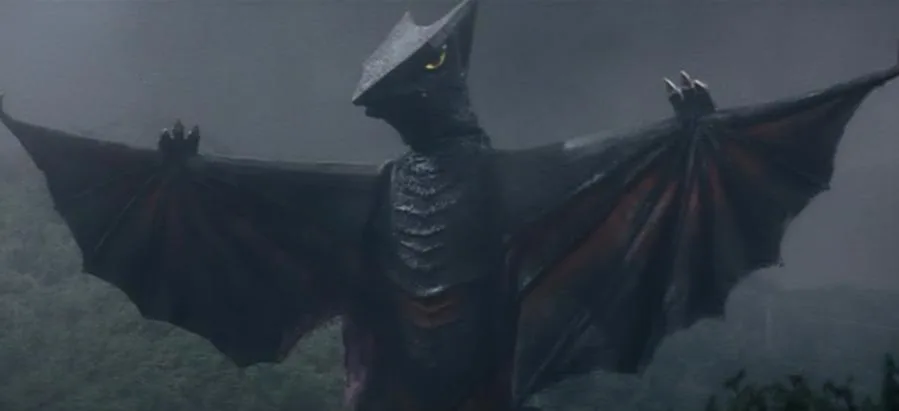
Heisei Era
In 1995, Gyaos was revived with Gamera for the first Heisei era Gamera film, Gamera: Guardian of the Universe, which follows a story similar to the one above. In this, the Gyaos were reimagined as creations of the ancient Atlantis civilization designed to control pollution. However, the asexual Gyaos reproduced out of control and destroyed their creators. As a last-ditch defense, they created the Gameras, who eliminated the Gyaos, although not in time to save the Atlanteans. However, clutches of Gyaos eggs survived and one clutch hatched in the modern world. After killing and eating all the inhabitants of Himigami Island and attacking the mainland, the Gyaos were lured to the Fukuoka Dome stadium in Fukuoka. The last Gamera, sensing his ancient foe, awoke as well and made his way to Fukuoka. Gamera attempted to stop the Gyaos, killing two, but was hindered by the misguided military, who considered him to be the greater threat. Eventually Gamera killed the last Gyaos, which had nested in Tokyo and had grown into Super Gyaos. Super Gyaos would also appear in flashback scenes in G3, and would eventually be revealed as the real killer of Ayana's parents.
The Gyaos do not appear in G2, but they are mentioned and are the subject of a book.
The Gyaos returned in a new, evolved form known as the Hyper Gyaos in G3, after Gamera used his mana cannon to destroy Legion in G2, which drained the Earth's mana, creating the right conditions for more Gyaos to hatch. Early in the film, Gamera battles a pair of Hyper Gyaos in the Shibuya district of Tokyo, killing them but also killing and injuring as many as fifteen to twenty thousand civilians. After Gamera defeated Iris in Kyoto, thousands of Hyper Gyaos swarmed towards Japan, intent on killing Gamera once and for all.
In 1995, Gyaos was revived with Gamera for the first Heisei era Gamera film, Gamera: Guardian of the Universe, which follows a story similar to the one above. In this, the Gyaos were reimagined as creations of the ancient Atlantis civilization designed to control pollution. However, the asexual Gyaos reproduced out of control and destroyed their creators. As a last-ditch defense, they created the Gameras, who eliminated the Gyaos, although not in time to save the Atlanteans. However, clutches of Gyaos eggs survived and one clutch hatched in the modern world. After killing and eating all the inhabitants of Himigami Island and attacking the mainland, the Gyaos were lured to the Fukuoka Dome stadium in Fukuoka. The last Gamera, sensing his ancient foe, awoke as well and made his way to Fukuoka. Gamera attempted to stop the Gyaos, killing two, but was hindered by the misguided military, who considered him to be the greater threat. Eventually Gamera killed the last Gyaos, which had nested in Tokyo and had grown into Super Gyaos. Super Gyaos would also appear in flashback scenes in G3, and would eventually be revealed as the real killer of Ayana's parents.
The Gyaos do not appear in G2, but they are mentioned and are the subject of a book.
The Gyaos returned in a new, evolved form known as the Hyper Gyaos in G3, after Gamera used his mana cannon to destroy Legion in G2, which drained the Earth's mana, creating the right conditions for more Gyaos to hatch. Early in the film, Gamera battles a pair of Hyper Gyaos in the Shibuya district of Tokyo, killing them but also killing and injuring as many as fifteen to twenty thousand civilians. After Gamera defeated Iris in Kyoto, thousands of Hyper Gyaos swarmed towards Japan, intent on killing Gamera once and for all.
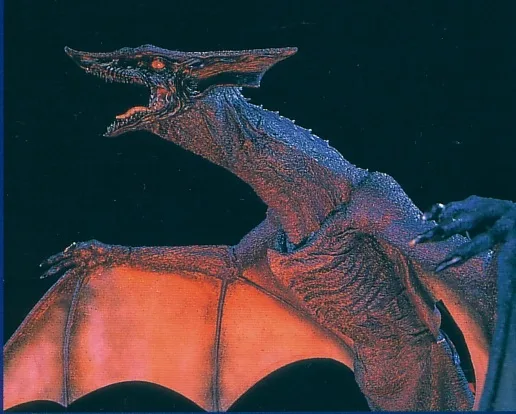
Millennium Era
The Gyaos make a cameo appearance in the newest Gamera film Gamera the Brave, as Gamera dies while fighting several Gyaos in a small village. This makes them the only monster in the Gamera series apart from Gamera himself to have appeared in the Showa, Heisei and Millennium series in some shape or form.
The Gyaos make a cameo appearance in the newest Gamera film Gamera the Brave, as Gamera dies while fighting several Gyaos in a small village. This makes them the only monster in the Gamera series apart from Gamera himself to have appeared in the Showa, Heisei and Millennium series in some shape or form.
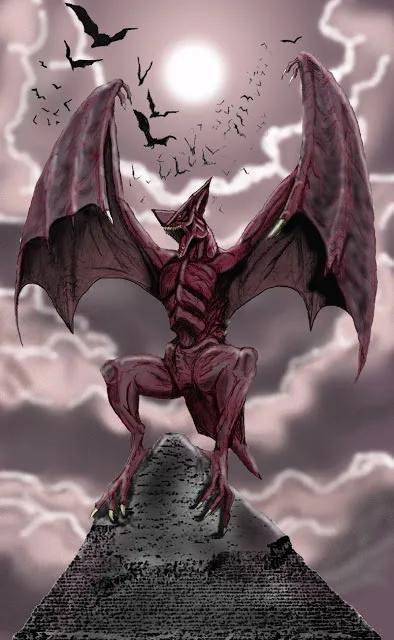
Powers and Abilities
In all incarnations the Gyaos have been shown to be astonishingly capable flyers, able to fly incredibly fast and perform agile aerial maneuvers with ease. Also, Gyaos have the ability to fire sonic beams from their mouths that can cut through nearly anything short of Gamera's shell, however, the Showa Gyaos had a weakness in that the double throats it used to create its Sonic Ray limited the mobility of its head and neck. Although they are nocturnal, the Gyaos can overcome the sun: emitting a fog-like gas to obscure the sun and douse flames, while the Heisei version simply evolves into Super Gyaos and grows protective plates over its eyes. While sunlight was merely an annoyance to the Heisei Gyaos, it was a fatal weakness in the Showa Gyaos, as Ultraviolet rays ate away his tissue. Interestingly, the Space Gyaos in Gamera vs. Guiron seems to have no such aversion to sunlight. The Showa version also has a regenerative ability, as it was able to regrow its severed foot after only an hour. The Heisei version showed several evolutions: it was asexual and could reproduce on its own. While not shown to be regenerative, the Super Gyaos is immensely physically tough, able to easily shrug off missile attacks, and even survive orbital re-entry however this isn't surprising as many kaiju have done things similar to these feats. In all eras Gamera and Gyaos are considered archenemies.
In all incarnations the Gyaos have been shown to be astonishingly capable flyers, able to fly incredibly fast and perform agile aerial maneuvers with ease. Also, Gyaos have the ability to fire sonic beams from their mouths that can cut through nearly anything short of Gamera's shell, however, the Showa Gyaos had a weakness in that the double throats it used to create its Sonic Ray limited the mobility of its head and neck. Although they are nocturnal, the Gyaos can overcome the sun: emitting a fog-like gas to obscure the sun and douse flames, while the Heisei version simply evolves into Super Gyaos and grows protective plates over its eyes. While sunlight was merely an annoyance to the Heisei Gyaos, it was a fatal weakness in the Showa Gyaos, as Ultraviolet rays ate away his tissue. Interestingly, the Space Gyaos in Gamera vs. Guiron seems to have no such aversion to sunlight. The Showa version also has a regenerative ability, as it was able to regrow its severed foot after only an hour. The Heisei version showed several evolutions: it was asexual and could reproduce on its own. While not shown to be regenerative, the Super Gyaos is immensely physically tough, able to easily shrug off missile attacks, and even survive orbital re-entry however this isn't surprising as many kaiju have done things similar to these feats. In all eras Gamera and Gyaos are considered archenemies.
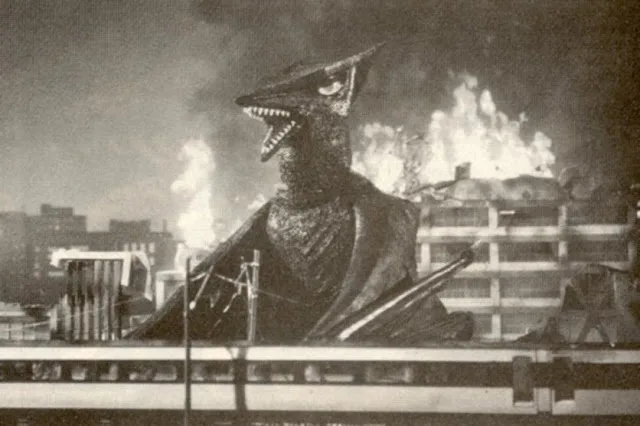
Film Appearances
Gamera vs. Gyaos
Gamera vs. Guiron
Gamera: Super Monster (Stock Footage)
Gamera: Guardian of the Universe
Gamera 3: Revenge of Iris
Gamera the Brave
Gamera vs. Gyaos
Gamera vs. Guiron
Gamera: Super Monster (Stock Footage)
Gamera: Guardian of the Universe
Gamera 3: Revenge of Iris
Gamera the Brave
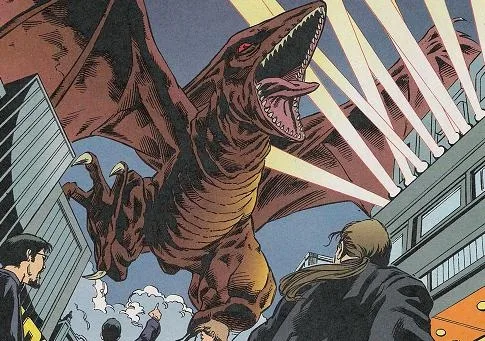
The Heisei Gyaos also appeared in the short-lived Gamera comic series by Dark Horse Comics. It was the initial foe faced by Gamera, and from whose DNA helped create the Kaiju Viras.